Culture
The White House
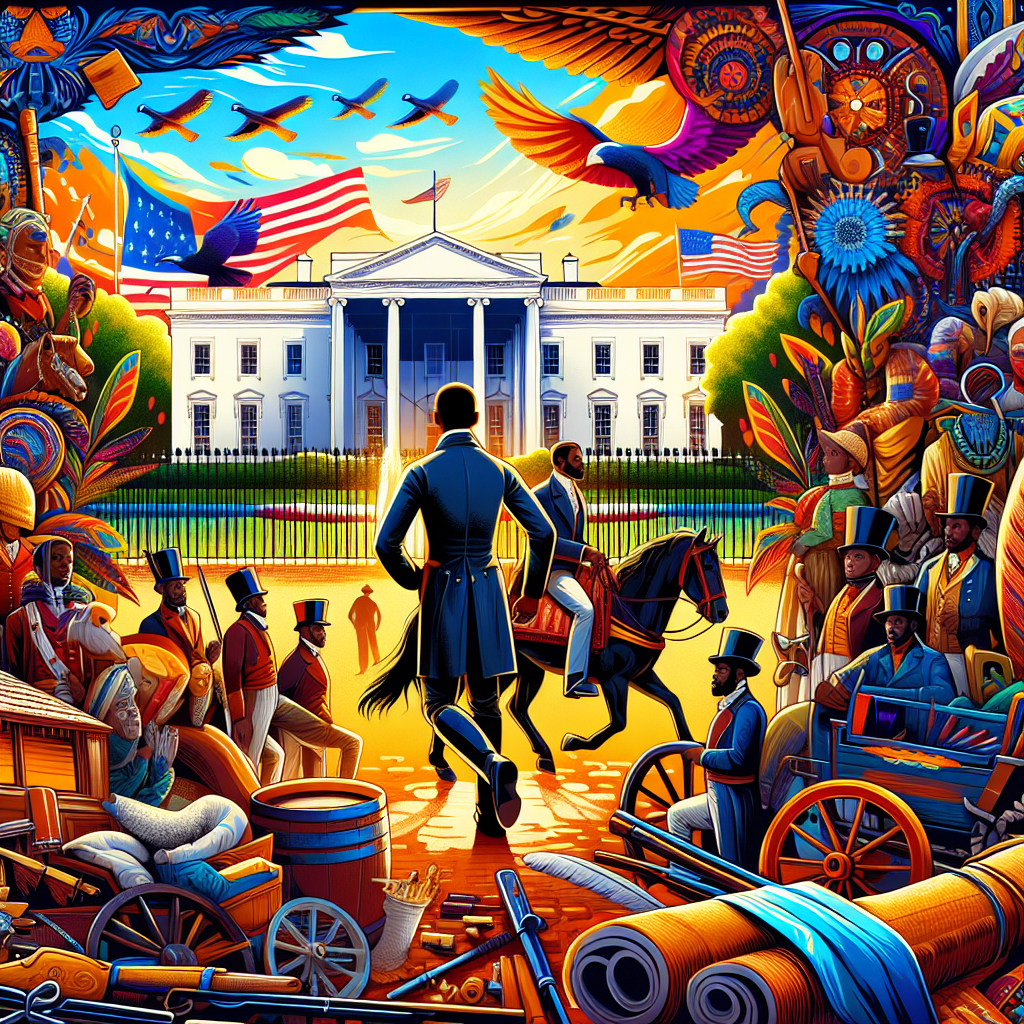
In this episode, we explore the tumultuous history of the White House, from its construction to its burning during the War of 1812. Through the eyes of an enslaved valet, we witness the chaos and dest...
The White House
Culture •
0:00 / 0:00
Interactive Transcript
spk_0
I'm Julie Andrews and it is my great pleasure to bring you Jane Austin Stories,
spk_0
the new show from the Noiser Podcast Network. I'll be reading Pride and Prejudice.
spk_0
We'll walk grandestates and take tea with well-dressed gentlewomen,
spk_0
but in this tranquil corner of England, not everything is quite as it appears.
spk_0
Listen to Jane Austin Stories wherever you get your podcasts.
spk_0
It is the 24th of August, 1814, Washington, DC. The capital of the United States of America is on fire.
spk_0
An enslaved African-American man stands at an upstairs window in the White House,
spk_0
the presidential mansion looking out over the city.
spk_0
Born on the estate of President James Madison and his wife Dolly,
spk_0
he has become a valued servant and now works as a valet.
spk_0
But the house in which he serves the medicines is almost empty.
spk_0
The room behind him is strewn with belongings left behind by the President in his hurry to escape.
spk_0
Standing frozen to the spot, the young man gazes down the length of Pennsylvania Avenue
spk_0
to where the capital building, the seat of the United States Congress, stands proudly on a slight hill.
spk_0
It is ablaze and incandescent beacon lighting up the night sky for miles around.
spk_0
Dark plumes of smoke spiral upwards, blotting out the moon and stars on what had promised to be
spk_0
a beautiful summer's night. As he watches, several of the capital's windows shatter in the heat,
spk_0
sending glinting shards of glass in old directions.
spk_0
And now, those responsible for the destruction are heading towards the White House, towards him.
spk_0
A small group of British soldiers in their distinctive red uniforms are drawing closer to the White House.
spk_0
The officers mounted on high-spirited horses.
spk_0
The beasts, glossy coats, are illuminated by the fiery glow of the capital behind them.
spk_0
The valet takes one final glance out of the window before running out of the room and down the stairs.
spk_0
He reaches the ground floor, just as the immense front door swings open.
spk_0
The soldiers pour through, barely noticing them as they split up and immediately begin to ransack the rooms.
spk_0
From his hidden vantage point in the hallway, he watches in horror as soldiers tear curtains from the windows
spk_0
through cushions off of chairs and sofas and rummage through drawers.
spk_0
Suddenly, a shout from the dining room draws the intruder's attention.
spk_0
Someone has found the meal laid out earlier for Dolly Madison and her guests,
spk_0
before they had understood the gravity of the threat posed by the British and fled to the port of Georgetown.
spk_0
Cavalter remain out of sight, the valet follows as the soldiers head eagerly towards the food.
spk_0
The red coats raucously help themselves to the wine and array of fine dishes on the table.
spk_0
They offer toasts, shouts of to the Prince Regent and down with Madison,
spk_0
interspersed with hails of course laughter. Once they have eaten their fill, the real reason the
spk_0
British have come to the White House becomes apparent. The officers instruct their men to bring
spk_0
all the fabric and wooden furniture they can find into the resplendent oval drawing room.
spk_0
Crimson sofas, bed frames, sturdy writing tables and gilded chairs upholstered in luxurious velvet
spk_0
are all added to the pile. The officer in charge steps forward to set the bonfire a light
spk_0
and the mountain of fabric catches quickly, sending a shower of sparks into the air.
spk_0
As the soldiers nearest to the fire recoil from the sudden burst of heat, the valet slips quietly
spk_0
back into the hallway and out of the front door. Sprinting away, he glances over his shoulder.
spk_0
Smoke is already billowing out of the windows of the grand building. On a clear night like this,
spk_0
who knows how long the fire might burn for.
spk_0
The White House at 1600 Pennsylvania Avenue in Washington DC is perhaps the most recognizable home
spk_0
in the world. Built soon after the Americans won their independence from Britain in the Revolutionary
spk_0
War at the end of the 18th century, it has been altered and expanded throughout its life,
spk_0
especially after being set aflame by the British in 1812.
spk_0
But from its inception, it was designed to be both the home of the sitting president and his
spk_0
family and the seat of the executive branch of the federal government. To this day, it stands as
spk_0
an enduring symbol of American democracy. In the more than two centuries since its construction,
spk_0
it has been the stage upon which various seismic moments in the history of America and across the globe
spk_0
have played out.
spk_0
So how did this iconic building come to exist? What monumental events have occurred within its walls?
spk_0
And how does the White House itself reflect America's ever-changing role in the world?
spk_0
I'm John Hopkins. From the Noisepodguss Network, this is a short history of the White House.
spk_0
In the 17th century, Britain establishes colonies throughout the Americas,
spk_0
from what is now Canada down to the Caribbean. Beginning as a series of small settlements,
spk_0
the colonization continues until the 1770s. By then, the settlers number 2.5 million,
spk_0
up from a tenth of that at the start of the century, and the 2.6 million square miles of
spk_0
territory across which they live are organized into 13 colonies.
spk_0
But despite the value the colonists add to the British economy, they have no representation in the
spk_0
British Parliament. Already tiring of being governed from abroad, things reach ahead when a
spk_0
series of harsh laws and taxes are imposed from London. In 1776, the colonies declare their
spk_0
independence from Britain and for the next few years, the Americans, with significant help from
spk_0
the French, fight for their freedom. Eventually, following a defeat at Yorktown, the British
spk_0
surrender in October 1781. The Treaty of Paris, formally ending the conflict and setting the
spk_0
boundaries of the new United States, is signed on the 3rd of September 1783.
spk_0
Now that they have gained their independence, the Americans must begin the hard work of setting
spk_0
up a government. In 1787, a constitutional convention is held in Philadelphia to decide on the
spk_0
principles and structure of the federal government. Delegates are sent from each state,
spk_0
as the colonies are now called. Heading the meeting is George Washington, a former soldier and
spk_0
politician who served as commander-in-chief of the army during the Revolutionary War. After
spk_0
months of negotiation, a newly drafted constitution is signed in September. It is decided that while each
spk_0
state will continue to make many of its own decisions, a federal government overseeing all of them
spk_0
will split into three branches. The judicial branch includes the Supreme Court as well as various
spk_0
lower courts. In the legislative branch known as Congress are the House of Representatives and the
spk_0
Senate. The executive branch is headed by a president who is also commander-in-chief of the armed
spk_0
forces. In 1789, a presidential election sees Washington chosen by those entitled to vote as the
spk_0
president of the United States of America. Shortly after his election, George Washington begins to
spk_0
make plans for a new federal capital. A site is chosen on the Potomac River at Maryland and Virginia
spk_0
seed 100 square miles of territory, which includes the port towns of Georgetown and Alexandria.
spk_0
A little later, this will be officially named the District of Columbia,
spk_0
and it is the site on which the new capital city will be constructed.
spk_0
But for now, in September 1791, the capital is simply named Washington, in honor of the president
spk_0
who chose its location. Kate Anderson Brower is author of The Residence Inside the Private World of
spk_0
the White House. The position did in Washington, DC because in part it's close to his home,
spk_0
Mount Vernon, and Washington is built on a swamp. So it's an unusual place to build a capital, but
spk_0
the Potomac River and its coastal being on the east coast between other major cities and close
spk_0
enough to Philadelphia and New York at the time. It was a strategic kind of midpoint between the
spk_0
Northeast and in southern cities. For his presidential palace, he personally chooses a spot on a slight
spk_0
rise to give it a view over the entire city. His plan, though, isn't just for one building, but the
spk_0
whole of the capital. So George Washington wanted Washington, DC to be like a Paris or London,
spk_0
but it really did not have the same beauty and didn't have the long history, of course, of these
spk_0
other cities. It was designed to really rival the beautiful capitals in Europe, and you do see a lot
spk_0
of the architecture in Washington is neoclassical. It arcans back to some European, Parisian architecture.
spk_0
In 1792, a competition is held to find an architect to build the presidential residence.
spk_0
Thomas Jefferson, one of the founding fathers of the United States, and who will go on to be the
spk_0
country's third president, even submits his own design, albeit under a pseudonym.
spk_0
So President George Washington and his then Secretary of State, Thomas Jefferson commissioned
spk_0
the White House, and there was a contest, and the Irish foreign architect James Holbin was the one
spk_0
who won this competition, and the White House is designed originally to look like this 18th century
spk_0
Georgian mansion in Dublin that was home to Ireland's parliament. Holbin's design is for a three-story
spk_0
mansion, although in the end Washington asks him to scale it down to two floors. It is in the
spk_0
palladium style, which draws from the classical architecture of ancient Greece and Rome,
spk_0
and is characterized by its symmetry and proportion.
spk_0
The cornerstone of the building is laid on 13 October 1792. Over the next few years,
spk_0
construction involves a variety of workers. A huge number of enslaved people are drafted in,
spk_0
as well as free African Americans and indentured servants. Temporary huts are built to house them
spk_0
as they dig the foundations and clear the whole area of trees. Later skilled stonemasons are brought
spk_0
in from Scotland and Ireland to build the house using sandstone quarried from nearby Virginia.
spk_0
In-slaved people are also used for this skilled craftwork, and they will continue to staff the White
spk_0
House until the Civil War in the middle of the next century.
spk_0
The House initially has over 100 rooms. The ground floor includes various reception areas,
spk_0
while the first floor comprises living quarters for the president and his family, as well as office
spk_0
space. Several well-known features of the building, such as the east and west wings, do not yet exist.
spk_0
And though it is already distinctively whitewashed, at this stage it is not commonly known as the White
spk_0
House, but as the president's palace. In 1800, the federal government relocates from Philadelphia,
spk_0
and the building's first resident arrives. But it is not George Washington, whose term as president
spk_0
ended in 1797. The first president to move into the White House was John Adams, with his
spk_0
white Abigail Adams, and Abigail complained about the house being unfinished. There were only six
spk_0
habitable rooms when they moved in. They had to walk up basically a plank in the mud to get to
spk_0
the front door of the White House, because the front steps hadn't yet been installed. So, you know,
spk_0
if you put yourself in 1800 when the Adams's moved in, the White House was nothing like it is today.
spk_0
Despite this unpromising start, John Adams is so moved by the building and what it represents
spk_0
that he writes to his wife, I pray heaven bestow the best of blessings on this house, and all
spk_0
that shall hear after inhabited. May none but honest and wise men ever rule under this roof.
spk_0
Decades later, President Franklin D. Roosevelt will have these words inscribed above the fireplace
spk_0
in the state dining room. Soon the capital building, the seat of the United States Congress,
spk_0
is also built in Washington DC, and the two buildings are linked by Pennsylvania Avenue.
spk_0
After he takes the presidential reigns in 1801, Thomas Jefferson begins the tradition of opening
spk_0
the White House to the public in the morning, a custom that continues to this day. But even now work
spk_0
continues. The roof leaks and needs mending, and there is a lack of sufficient staircases,
spk_0
and then disaster strikes.
spk_0
Peace between Britain and the newly independent America was always uneasy.
spk_0
Sources of tension include British support for indigenous groups opposing American expansion
spk_0
westwards, as well as England's attempt to restrict trade during the Napoleonic Wars.
spk_0
In 1812, the United States declares war on the United Kingdom. After two years of conflict,
spk_0
American troops are defeated at the Battle of Bladensburg, just a few miles from Washington.
spk_0
President Madison flees, as the victorious British eager for revenge for the Americans raising
spk_0
of their colony of York, modern day Toronto, turn their attention to the nation's capital.
spk_0
The British burned the house to the ground. There were bonfires in the Library of Congress.
spk_0
I mean, they burned the capital almost to the ground as well. And if it were not for this storm
spk_0
that blew in, it was about 100 degrees that day, and there was a summer storm which happened
spk_0
frequently here in Washington. And it blew in, and fortunately, the rain put out a lot of those
spk_0
fires and the British retreated, but it was a near demolition of these important
spk_0
hearts of Washington. You see, that we're really just constructed a few years before.
spk_0
Knowing what's coming, Dolly Madison frantically removes precious items and government papers
spk_0
from the building and remembers a famous portrait of the man who commissioned her home to.
spk_0
As the White House was burning, there's a famous story about First Lady Dolly Madison
spk_0
insisting on staying in the house so that this portrait of George Washington could be saved.
spk_0
She did not save it herself as was previously reported. She directed her staff to save it,
spk_0
but it is important that Gilbert Stewart portrait of George Washington was really salvaged.
spk_0
But nothing can save the building itself, which is reduced within a few short hours to a
spk_0
child shell. Peace between the two nations is eventually agreed the next year,
spk_0
and the Americans begin the arduous process of rebuilding their federal capital city.
spk_0
The White House is reconstructed and enlarged over the next several years.
spk_0
It is whitewashed to cover the marks left on the exterior by the fire, and terraces are added.
spk_0
Porticoes covered entrances or porches supported by columns are also adjoined to the north and south
spk_0
of the building in the 1820s. The burning itself is a trauma that will linger for this young nation,
spk_0
but there is perhaps a silver lining to the calamity.
spk_0
The destruction of the White House was particularly traumatic.
spk_0
President Madison asked James Hope in to rebuild the mansion. It was already a national icon,
spk_0
and every president since then has done something to make the White House really uniquely his own.
spk_0
But if you look at just the timing of 1814, I mean, 1776 was not that long before,
spk_0
so it was traumatic for the country, but I think it also helps the country kind of
spk_0
renew a sense of patriotism and purpose in what the United States stood for.
spk_0
It's symbolism fortified by devastation and renewal. The White House occupies a place in the
spk_0
American imagination. It is not just the president's home, but a seat of government, and thus a building
spk_0
in which every citizen has a stake. A few years later, some citizens make themselves a little too much at home.
spk_0
It is a bright spring day in March 1829. On Pennsylvania Avenue, an enormous crowd has turned out
spk_0
for the presidential inauguration. As President Andrew Jackson processes down the street on a
spk_0
magnificent White House, they cheer for the man nicknamed the People's President.
spk_0
But in the White House itself, which has been opened to all for the occasion, the crowd is becoming a problem.
spk_0
A writer and political commentator named Margaret Bayard Smith is pressed against a wall in the
spk_0
room with a view to the hallway. Many of the thousands of people who have come to see Jackson's
spk_0
sworn in as President have invited themselves to the White House for refreshments. Hundreds are packed
spk_0
into the room with even more in the hallways beyond, and they keep coming. Margaret takes notes,
spk_0
watching in astonishment as a man climbs through the large window to her left, clearly tired of
spk_0
waiting to get in through the front door. The crowd is concentrated around the table in the middle of the
spk_0
room, laid out with dainty cakes and delicate glasses of wine and lemonade. As dozens scrabble for the
spk_0
refreshments, glasses and crockery are knocked over and sent crashing to the floor. Across the room,
spk_0
there's even a man climbing onto a crimson brocade sofa, trampling mud over the exquisitely embroidered
spk_0
cushions. Suddenly, Margaret's attention is caught by a disturbance in the doorway.
spk_0
Craying her head over the densely packed bodies in front of her, she catches sight of the President
spk_0
himself, Andrew Jackson. The crowd surges towards him, everyone seemingly trying to shake his hand
spk_0
and offer their congratulations. But as more and more people mob him, he is in danger of being crushed
spk_0
by the onslaught of well wishes. Except now, to Margaret's relief, a group of aides shove their way
spk_0
through the crowd towards him, joining hands, they form a human shield, straining their arms as
spk_0
they attempt to hold back the horde. All at once, the attention of the assembled throng turns towards
spk_0
a steward in the hall. Standing just inside the front door, he calls loudly that further refreshments
spk_0
will be served on the lawn. To demonstrate, he uncorks a bottle of liquor in his hand and pours it
spk_0
into a metal basin at his feet, followed by another, before dragging the tub outside. A huge cheer goes
spk_0
up from the crowd and as one body they spill into the hall and out onto the grass chasing the promise
spk_0
of more alcohol. Margaret turns her attention back to the President in time to see one of his aides
spk_0
gesturing towards a window. Another takes Jackson by the arm and helps him swing a leg over the
spk_0
seal before he drops out of sight, away from the danger posed by the very people who came to
spk_0
celebrate his victory. Fortunately, despite the overzealousness of the guests, President Jackson is
spk_0
unharmed. Once the mess has been cleared away, Jackson continues to smarten up the house over the
spk_0
course of his tenure. He spends $50,000 on refurbishments, about $1.7 million in today's money.
spk_0
One of the objects he purchases is a silver dining set decorated with American eagles.
spk_0
Yet these improvements do not satisfy a number of 19th century European visitors.
spk_0
One of those to pen a scathing description of the building is the renowned English novelist Charles Dickens.
spk_0
During his 1842 tour of America, Dickens receives an invitation from the President to visit the White House.
spk_0
But on the day of his appointment, he rings the front bell two or three times without receiving an answer.
spk_0
Entering instead through a back door, he wanders around upstairs until a servant shows him to a waiting room.
spk_0
There, he is disgusted to find several men spitting tobacco juice on the carpet.
spk_0
The house itself seems worn and drab. His eventual meeting with President Tyler is no more successful,
spk_0
with the two men sitting awkwardly in virtual silence near a hot stove. Dickens verdict is harsh.
spk_0
The building is more like a gentleman's clubhouse when a presidential mansion.
spk_0
It is into this slightly dilapidated White House that Abraham Lincoln, his wife Mary,
spk_0
and their children move in March 1861. There is by now central heating and gas lighting,
spk_0
and they enjoy running water throughout their private rooms. Even so, Mary immediately sets to
spk_0
work redecorating, far exceeding the budget allocated by Congress for the renovation.
spk_0
But the house she inhabits is still very different to the one we can see today.
spk_0
Modern presidents famously work from the Oval Office in the West Wing,
spk_0
and the second story of the central part of the White House is exclusively a domestic space.
spk_0
But in the 19th century, the East and West wings are yet to be built,
spk_0
and living and working space in the building is much less clearly demarcated.
spk_0
Theodore Roosevelt moved his office from the second floor of the residence into the West Wing,
spk_0
and then Taft added to the Oval Office, and it was completed in 1909. So, really, we're talking about
spk_0
the center of the White House, which is the Oval Office, not really being completed until more
spk_0
than 100 years after the White House was constructed. So, when you think of famous American
spk_0
presidents like Abraham Lincoln, they were working out of the second floor of the White House.
spk_0
They were working out of an office upstairs.
spk_0
The room in which Lincoln chooses to work is now known as the Lincoln Bedroom,
spk_0
but the president does not sleep there. For most of his presidency, it is the room from which he
spk_0
directs the course of the American Civil War, which erupts shortly after he is elected.
spk_0
The conflict fought between the Confederacy of mostly Southern states and the Union of Northern
spk_0
states over the issue of slavery lasts four years and claims hundreds of thousands of lives.
spk_0
Lincoln is not the first president to fight a war from the White House.
spk_0
From 1846 to 1848, James Polk directed the course of the Mexican American War from the building,
spk_0
but the Civil War is a struggle over the fate of America as a nation.
spk_0
From his office overlooking the South Lawn, Lincoln makes life or death decisions as Commander-in-Chief,
spk_0
and pens such speeches as the famous Gettysburg Address.
spk_0
And it is in this room that he crafts one of the most impactful orders ever issued by an American
spk_0
president, the 1863 Emancipation Proclamation, declaring every enslaved person in the Confederate
spk_0
states to be free. The next year, the total abolition of slavery in the United States will be
spk_0
enshrined in law as the 13th amendment to the Constitution.
spk_0
Ultimately, the Union and Lincoln are victorious, but in 1865, shortly after he is reelected and the
spk_0
war is won, he is assassinated in a theater by Confederate sympathizer. Afterwards, the White House is
spk_0
transformed from a command station into a place of deep mourning. His body is wrapped in a flag,
spk_0
placed in a coffin and escorted by Union soldiers back to the presidential mansion where he lies in
spk_0
states for several days. In the aftermath of the Civil War, America is once again a flourishing
spk_0
democracy. The industrial revolution is in full swing, and the United States is at the heart of
spk_0
technological development and innovation. This is epitomized by the changes made to the White House
spk_0
itself in these years. In 1866, President Andrew Johnson has a telegraph room installed.
spk_0
In 1877, Rutherford B. Hayes invites Scottish engineer Alexander Graham Bell to the White House
spk_0
to display his new invention, the telephone. The President is so impressed that he immediately
spk_0
orders one to be installed in the telegraph room. Fascinated by new technology, Hayes also welcomes
spk_0
Thomas Edison, who demonstrates his phonograph. Accordingly, Hayes becomes the first President
spk_0
to have his voice recorded. A few decades later, Theodore Roosevelt takes the helm. Though the name
spk_0
has been used colloquially since the beginning, it is under his presidency that the building becomes
spk_0
widely known as the White House, rather than the President's palace, the executive mansion,
spk_0
or any of the many other names it has had over the years. It also now undergoes significant
spk_0
renovation. In 1902, Theodore Roosevelt hired this famous architecture firm, McKinney, and White
spk_0
based in New York. And they renovated the house. Roosevelt had a third story outfitted with guest
spk_0
rooms, and they tore down a huge series of glass conservatories that were used to grow fruit and
spk_0
flowers on the grounds of the White House, which are really fascinating to see. And that became
spk_0
based for what we know as the West Wing. The President's office and those of his growing staff
spk_0
moves into the newly constructed West Wing, which retains its administrative purpose to this day.
spk_0
But Roosevelt and his wife have six young children, and so the entire second floor is given over
spk_0
to the family. They share their tendency with an impressive menagerie of pets, including a badger,
spk_0
a pig, assorted birds, and reptiles, even a small bear. When one son Archie is sick in bed,
spk_0
his beloved pony, Algonquin, is brought up to his bedroom in the White House elevator.
spk_0
It is a reminder of how tightly connected politics and family can become in the White House.
spk_0
And in a few years' time, a close family member of one particular President will become as close
spk_0
to the center of power as it is possible to be.
spk_0
It is the evening of October 2, 1919. An attractive middle-aged woman with tightly curled dark hair
spk_0
hurries down a corridor on the second floor of the White House.
spk_0
Edith Wilson is the second wife of President Woodrow Wilson. Her husband went up for a bath
spk_0
an hour ago, and she has not seen him since. Given his recent precarious health, there is always
spk_0
the chance that something awful has happened. A pace, quickens, a footsteps muffled by the thick
spk_0
rugs on the floor as she pushes open the door of the bathroom next to their bedroom in the southwest
spk_0
corner of the house. She is not prepared for the sight that greets her. Her husband is lying
spk_0
sprawled on the frigid, tiled floor next to the bath still in his shut and trousers.
spk_0
His face is pressed into the floor, his one visible eye, shut.
spk_0
Edith falls to her knees beside her husband. With trembling fingers, she tries to find a pulse
spk_0
in his wrist. At first, all she can hear is the thunderous beating of her own heart.
spk_0
But eventually she feels it. It is weak, but he is still alive.
spk_0
Tears running down her cheeks and dripping onto the dark fabric of her dress, she takes a steady
spk_0
in breath. Then she springs into action. Her husband is much taller than her, but she rolls him as
spk_0
gently as she can onto his back. His eyes flicker open, but he remains unconscious.
spk_0
The left side of his body seems unusually stiff, and she struggles to position his limbs into what
spk_0
seems a comfortable position. Next, she runs to their bedroom next door and retrieves a pillow to
spk_0
cushion his head. Once she is done, all she can for him, she goes to the telephone in the adjoining
spk_0
sitting room. She dials Ike Hoover, chief Usher at the White House. He has been in the job
spk_0
for over a decade and a half and has served under three presidents already. The man is a consummate
spk_0
professional. Barely able to keep the tremor out of her voice, Edith tells him to call Wilson's
spk_0
doctor Grayson and ask him to hurry. The president is very sick, she says.
spk_0
After hanging up, she returns to sit on the bathroom floor next to her husband.
spk_0
Gripping his hand in hers, she offers a quick prayer for his recovery.
spk_0
And then she leans back against the bath to wait for the doctor and to plan.
spk_0
Having served as president throughout the First World War, Woodrow Wilson spearheads the effort
spk_0
to create the League of Nations, the Forerunner of the United Nations, so that such a devastating
spk_0
global conflict can never again occur. But the stress takes its toll. When he has a stroke in
spk_0
October 1919, his wife Edith resolves to do anything to aid her husband's recovery.
spk_0
And so, with his doctor, she devises a plan.
spk_0
Believing that his health has the best chance of improvement if the League of Nations work
spk_0
continues and comes to fruition, they also agree that he must be shielded from bad news while he
spk_0
regains his strength. So, until the end of his second term in 1921, Edith effectively takes over
spk_0
as president. Everything coming into the White House for Wilson to deal with goes through her.
spk_0
The whole operation is shrouded in secrecy, with his condition kept from both the American people
spk_0
and much of the government. But even with Edith working doggedly in lieu of her
spk_0
ailing husband, the US Senate eventually votes against membership of the League.
spk_0
They say that because she did that, that the US didn't enter the League of Nations because she
spk_0
kind of mishandled it. But yeah, Edith Wilson actually was kind of like the first people say the
spk_0
first female president. Limited as it is by the absence of the power of the United States,
spk_0
the League of Nations ultimately fails in its objectives and is unable to prevent the outbreak
spk_0
of the Second World War, after which it dispans. Despite Edith Wilson's secret wielding of power,
spk_0
it is Eleanor Roosevelt, wife of Franklin D. Roosevelt, who is remembered as the woman who redefined
spk_0
the role of the First Lady. By far, the most impactful First Lady of the 20th century was Eleanor
spk_0
Roosevelt. She changed the game. When it came to what First Ladies can do, she was in the position
spk_0
for 12 years, which is an unprecedented amount of time. She was there for the Great Depression and
spk_0
World War II, these kind of cataclysmic events in American history.
spk_0
Throughout her tenure as First Lady from 1933 to 1945, Eleanor refuses to be bound by the
spk_0
traditional duties of wife and hostess. Instead, she continues with her speaking engagements and
spk_0
civil rights activism. Attends lay the meetings and holds regular briefings with the media.
spk_0
She was the only First Lady to have press conferences with just female reporters because she saw
spk_0
how these mostly male reporters were taking over and getting all the best scoops, and so she insisted
spk_0
on having her own press conference with women. And then she had the My Day column where she was
spk_0
talking to the American people. I mean, she was a true force of nature, and Eleanor Roosevelt earned
spk_0
the nickname Rover by the Secret Service because she literally roared around the world.
spk_0
She makes use of radio to reach people directly in their homes, making some 300 broadcasts.
spk_0
Sometimes these are even recorded from the White House Radio Studio itself, created by her husband
spk_0
for his so-called fireside chats, a series of evening addresses given by the President.
spk_0
Her husband, the man known as FDR, contracted polio some years before his presidency,
spk_0
which permanently effect his mobility. The ubiquitous stigma around disability at the time
spk_0
makes him determined to hide from the public the fact that he uses a wheelchair.
spk_0
Though he teaches himself to walk short distances while wearing iron leg braces,
spk_0
when he takes up residence in the White House, changes are needed to make it accessible for him.
spk_0
Discreet to a man, the staff help him to maintain the illusion that he is able-bodied,
spk_0
wheeling him into rooms and seating him at desks and tables before guests arrive.
spk_0
After FDR dies in office towards the end of World War II, he is succeeded by Harry Truman,
spk_0
and it is during his presidency that the building is extensively renovated.
spk_0
Out of necessity above any other consideration.
spk_0
The roof was caving in. There's a great story about Margaret Truman,
spk_0
their only child, and she loved to play the piano and a foot of the piano actually plunge
spk_0
through the rotted flooring of the sitting room. So it was time to move out, and they moved
spk_0
into Blair House, which is across the street from the White House, so that this big renovation
spk_0
can be done. And what Truman added, which I think is one of the most beautiful parts of the White
spk_0
House is the Truman balcony, and it's where families can go and relax and look out onto the
spk_0
south lawn of the White House. It's really like their back deck that I know that first ladies,
spk_0
especially love to go out there and have dinner and just have some privacy.
spk_0
In 1961, a young couple moved into this newly renovated White House.
spk_0
John F. Kennedy and his wife, Jackie, bring glamour and modernity to the roles of President and
spk_0
First Lady. Qualities that are reflected in the changes that they make.
spk_0
Jacqueline Kennedy was really the person who modernized the White House by televising a tour
spk_0
of the White House and also warmheartedly by working to get rid of what she called these hideous
spk_0
horrors that were in the White House. There was a lot of just furniture that needed to be updated,
spk_0
and Jackie Kennedy wanted to make the White House the most perfect house in the country, and so
spk_0
she got together wealthy Americans, including Henry DuPont, and collectors of early American
spk_0
furniture, and she created a Fine Arts Committee, and they came and they brought in incredible pieces
spk_0
of art and they went around the country and they would find, you know, desks that had belonged to
spk_0
President Madison or chairs that had belonged to Thomas Jefferson and they would bring them in.
spk_0
Jackie Kennedy found the White House Historical Association dedicated to protecting, preserving,
spk_0
and providing public access to the rich history of the house. Under her supervision,
spk_0
the space becomes both a museum of American presidential history and an example of exquisite taste.
spk_0
Jackie Kennedy saw herself as the art director really of the 20th century. She believed that
spk_0
fashion and the arts were really an important part of American culture, and this young country,
spk_0
she did a lot to promote American culture both internally but then outside because everybody
spk_0
in the world, you know, Charles DeGal, and all the great leaders looked up to Jackie and
spk_0
idolized her, and so I think that she was a sophisticated person that brought the White House up
spk_0
a level that it hadn't been before. The Kennedy's time in the White House also demonstrates the
spk_0
close relationship between the first family and the House staff. Huge numbers of people work in
spk_0
the presidential and cabinet offices in the West Wing, but alongside these political staffers
spk_0
who might occasionally make the headlines, the House itself is run by a largely hidden workforce.
spk_0
The White House staff is made up of about a hundred people and they are housekeepers,
spk_0
carpenters, cooks, florists, and they all work there from one presidency to the next so they're not
spk_0
hired by the president. They serve at the pleasure of the president and they can be fired for any reason.
spk_0
But they are not political in any way, which is very unique in Washington. The resident staff are
spk_0
just incredibly dedicated, loyal people. Spending almost every day with a president and his family,
spk_0
they see them at some of their most intimate moments. They are uniquely trusted and are relied upon
spk_0
to exercise absolute discretion. They form incredibly close relationships with the presidents and
spk_0
first ladies they serve. I interviewed dozens of them and they told me that the Bushes,
spk_0
George H.W. Bush and Barbara Bush were their favorites to a person. Everyone said that because
spk_0
I think that the Bushes were used to having staff and so it's much easier when you're used to
spk_0
being served. To deal with that, whereas the Carter's, the Clinton's, the Obama's, none of them grew up
spk_0
with maids and housekeepers and so it's not a natural way of being for them so I thought that was
spk_0
interesting. This closeness between the first family and the people who work in the White House
spk_0
is highlighted most poignantly in the days after President Kennedy is assassinated in Dallas
spk_0
on the 22nd of November 1963. A really important moment to highlight is in the east row when
spk_0
President Kennedy's body was brought back to the White House and the staff gathered to pay their
spk_0
respects and when Jackie Kennedy walked into the east room they turned to face the wall
spk_0
because they wanted to give her private time alone with her husband. And the fact that Jackie was
spk_0
so stoic during that time they really felt like they also had to not be sobbing even though they felt
spk_0
like it. The second half of the 20th and opening decades of the 21st century see the White House
spk_0
bearing witness to a series of seismic events in both American and global history.
spk_0
Some of these are scandalous. In 1974 President Nixon is forced to resign following the Watergate
spk_0
scandal. Members of his campaign had broken into Democratic Party headquarters to try and help his
spk_0
reelection efforts but to begin with the president himself cannot be tied to the crime.
spk_0
In the end it is the recording system that Nixon himself installed in the Oval Office that proves
spk_0
his downfall. Knowing they contain incriminating information the president refuses to release the
spk_0
tapes. A decision that sees him resign before he can be impeached.
spk_0
But it is from another room, the situation room, that modern American presidents monitor the
spk_0
most dramatic events. Located in the White House basement this is a place from which presidents and
spk_0
their staff watch the Berlin Wall fall, observe the course of the war in Kosovo and respond to the
spk_0
9-11 terrorist attacks. In 2011 its importance is highlighted in a news story that reaches around the world.
spk_0
The situation room is its own universe and books have been written about it alone because it's
spk_0
such an important top secret place inside the White House and its where presidents can monitor
spk_0
military actions around the world and what comes to mind about the situation room is the
spk_0
Bin Laden raid and the famous images of Hillary Clinton, Barack Obama watching the raid unfold not
spk_0
knowing if it would be successful or not. As President Obama sits tensely in the situation room
spk_0
waiting for the news that Bin Laden had been killed his wife and children sleep just upstairs.
spk_0
Since its inception the White House has fulfilled this dual function both a home and a government
spk_0
office and nowhere is this more apparent than in the moment when one president leaves office
spk_0
and hands the house over to his successor. It is a time of great upheaval not just for the outgoing
spk_0
and incoming presidents but for the White House staff as well. The change over every four to eight
spk_0
years is very difficult for the White House staff because they grow very close to the family they
spk_0
serve. It was really hard when the bushes left and the Clinton's came in because the staff grew
spk_0
so close to George H.W. Bush and Barbara Bush. It's almost a kind of funerial feeling in the house
spk_0
and the staff actually has to move the former president out and the new president and his family in
spk_0
because of security reasons they can't hire outside firms to do this so it's all hands on
spk_0
death. You have engineers and florists you know moving heavy furniture on an auguration day and it's
spk_0
quite a sight inside the White House there's a lot going on and it's a really emotional day.
spk_0
But as America becomes more politically divided in the 21st century White House staffing policies
spk_0
change. When he becomes president Barack Obama replaces George Bush's chief usher with his own.
spk_0
This pattern continues with Trump and then Biden and then Trump again.
spk_0
Presidents now fear that senior staff members loyal to their predecessor might gossip about the
spk_0
goings-on inside the presidential residence. In recent history the most striking change over
spk_0
occurs when Barack Obama the first black president leaves office and is replaced in the White House
spk_0
by Donald Trump. On January the 6th 2021 when it is Trump's turn to leave after losing the
spk_0
election to Joe Biden he gives a speech outside the White House claiming the victory has been stolen
spk_0
from him. His supporters rally in his defense and the resulting attack on the Capitol becomes a
spk_0
defining moment in modern U.S. politics. Ultimately the riots fail and Trump does leave office
spk_0
handing over to Biden on inauguration day as expected democratic norms for the moment prevail.
spk_0
But since Trump's victory in the 2024 general election the White House has continued to bear witness
spk_0
to novel and unprecedented events that seem to mirror Trump's personality.
spk_0
In March 2025 the South Lawn was turned into a car showroom from which the president encouraged
spk_0
people to buy Teslas seemingly as a favor to billionaire Elon Musk for his support during the election.
spk_0
You know I think the White House is a reflection of each president and first lady who lives in
spk_0
the House because first lady has usually played a big role in this and we see it with President
spk_0
Trump he's definitely making it more in line with kind of the ballrooms at Mar-Lago in the outdoor
spk_0
spaces there and so he's putting his own stamp on it also with the Oval Office a lot of gold
spk_0
and there was a more subdued interior decor during the Biden and Obama administration. So it's kind
spk_0
of a reflection of the personality of the man who holds the office and that's what the White House does
spk_0
it's kind of a mirror image of the person that's there the same exact space but it's completely
spk_0
transformed every four to eight years. Home to 44 presidents their wives and families as well as
spk_0
being the workplace of countless AIDS staffers domestic staff and more the White House continues to
spk_0
evolve more than 230 years after its first stones were laid. In July 2025 the building of a new state
spk_0
ballroom was announced totalling 90,000 square feet it is expected to seat 650 people and comes
spk_0
with a price tag of $200 million. The building's role and meaning will undoubtedly continue to evolve
spk_0
further in the years to come as it always has but one element has remained constant throughout its
spk_0
storied history. The White House is the physical manifestation of American democracy and it means
spk_0
an incredible amount to the American people because of what it symbolizes it's such a physical
spk_0
manifestation of everything that the United States stands for.
spk_0
Next time on short history I will bring you a short history of the London Underground.
spk_0
London was a crowded mess and lower the slum so right in the center so there's an idea that people
spk_0
should live further out and the only way that would be able to achieve that would be with a railway
spk_0
system. Well you can't demolish all the houses on the way to central London from the suburbs you
spk_0
would have to put the railway underground and that was the revolutionary idea. That's next time.
spk_0
If you can't wait a week until the next episode you can listen to it right away by subscribing
spk_0
to Noiser Plus. Head to www.noiser.com forward slash subscriptions for more information.
Topics Covered
Julie Andrews
Jane Austen Stories
Pride and Prejudice
Washington DC history
White House
British soldiers
Burning of Washington
George Washington
Thomas Jefferson
American independence
Historical podcast
Noiser Podcast Network
Civil War history
Palladian architecture
Colonial America
American democracy