Culture
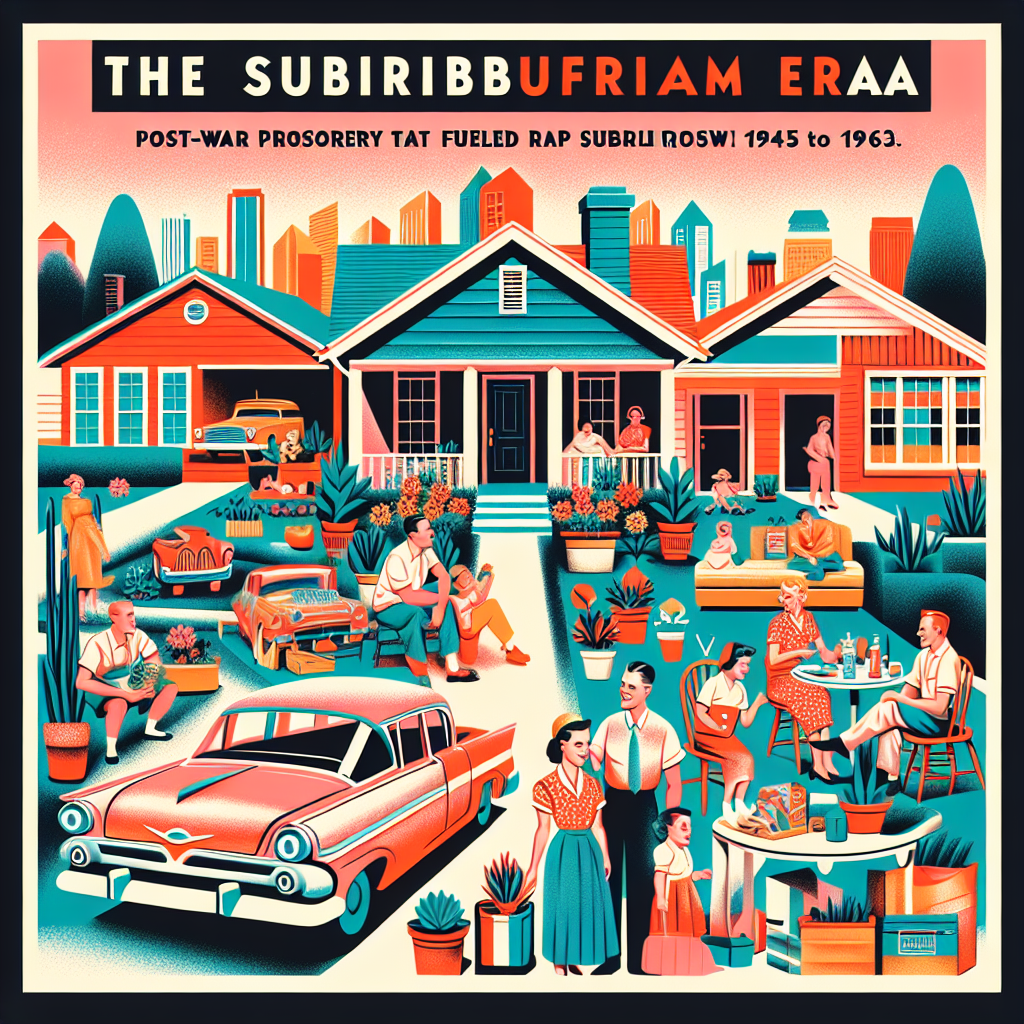
The Suburban Era, 1945-1963
In this episode of the American History Podcast, we explore the transformative suburban era in the United States from 1945 to 1963. As post-war prosperity fueled rapid suburban growth, we examine the ...
The Suburban Era, 1945-1963
Culture •
0:00 / 0:00
Interactive Transcript
spk_0
Welcome back to the American History Podcast and today's episode we're going to talk about the
spk_0
rise of the suburban era in American history from about 1945 to 1963. So starting off with,
spk_0
we're going to see suburban growth really grow and accelerate at the end of World War II.
spk_0
And during the 1950s we see suburbs are growing 40 times faster than cities, so by
spk_0
1960 half the American people live in suburbs. And we see this return in prosperity for the economy
spk_0
brings the baby boom and there's going to be a need for new housing. Automobiles are going to be
spk_0
making the suburbs accessible. But the spurt and suburban growth is going to take its toll on the
spk_0
cities which suffer as the middle class starts leaving these urban areas. So the great depression
spk_0
had caused a lot of couples to delay beginning a family. In the 1930s we see the birth rate
spk_0
is going to reach its lowest point in American history about 18 and 19 per thousand people.
spk_0
As prosperity returns during the war we see birth rates begin to rise. By 1952 the birth rate is
spk_0
going to pass 25 per thousand to reach one of the highest fertility rates in the world.
spk_0
New brides are going to be younger which translates into increased fertility.
spk_0
New brides or Americans are going to be choosing also to have larger families. The number with
spk_0
three children is going to triple those with four more quadruple. So historians and demographers
spk_0
they have a very hard press to explain you know this big population bulge. And it's not going to
spk_0
be just limited to the United States. We see Australia, New Zealand, Britain, West Germany,
spk_0
and our big among them in the early 1960s. But the long-term training American fertility rates
spk_0
is going to be downward just like it was in other industrialized countries. So
spk_0
so single-family houses with lawns they require a lot of open land.
spk_0
Unlike row houses that were just built side by side in urban development. So that means that
spk_0
developers like Levitt who was a William Levitt he was known for building like these suburbs called
spk_0
Levitt towns. But Levitt and some other builders they're going to be choosing banquet areas outside
spk_0
major urban centers. So with the new houses further from the factory's offices and jobs,
spk_0
automobiles are going to become more indispensable than ever. And as the population shifts to the
spk_0
suburbs traffic is going to be congesting the old country road. So to help ease that congestion
spk_0
the Eisenhower administration is going to propose a 20-year plan to build a massive interstate highway
spk_0
system. To get support, Eisenhower is going to address cold war fears as well. Saying the new system
spk_0
is going to help cities evacuate in the case of nuclear attack. In 1956 Congress will pass the
spk_0
National Interstate and Defense Highways Act setting in motion the largest public works project
spk_0
in history. So the federal government is going to pick up 90% of the cost through a highway trust
spk_0
fund financed on special taxes on cars, gas, tires, lubricants and auto parts. So the act had an
spk_0
enormous impact on American life. We're going to see annual driving increases shopping centers with
spk_0
new roads. So it provides suburbanites with an alternative to the longer trip downtown.
spk_0
I'm going to see almost every community has at least one highway strip dotted with stores,
spk_0
bowling alleys, gas stations and driving restaurants. But these interstates are going to be
spk_0
affecting cities in less fortunate ways. So the new highway system features beltweights. These
spk_0
ring roads around the major urban areas. So instead of leading traffic downtown, the beltways
spk_0
allow motorists to avoid the city altogether. So as people took to their cars, we see intercity
spk_0
rail service and mass transit goes down. 75% of old government transportation dollars is going to
spk_0
go to subsidize travel by car and truck. At the same time middle class homeowners, we're going to
spk_0
be moving to the suburbs, many low paying and skilled jobs just disappear from the city. So
spk_0
forces the urban poor into reverse commuting from city to suburb. So all these trends
spk_0
made cities less attractive places to live or do business with falling property value city
spk_0
governments lack the tax base to finance public services. And we see a big cycle that ensues
spk_0
that proves most damaging to the urban poor who have very few means of escape.
spk_0
So with the spread of suburbs comes some other growing pains in late summer of 1956 residents
spk_0
of Portuguese bin California learned a painful lesson about septic systems and hillside
spk_0
development. So houses along Palas Verde's drive south began to slide slowly at first.
spk_0
By October 156 houses along with their lawns, gardens and swimming pools had gently slump
spk_0
downhill as though they were like putting almost. And over time the
spk_0
effluent like the stuff coming out from septic systems assisted by lawn watering, it's
spk_0
slick to the underlying layers of shales that tilted toward the ocean. And with no friction to
spk_0
hold the soil and shell and praise the gravity just kind of did the rest. And we see suburbs
spk_0
in Washington DC since the 90 Pittsburgh that suffer similar landslide disasters. Other
spk_0
misfortunes having when developers built in wetlands and on flood plains. So the disappearance
spk_0
of open space confronts a lot of suburbanites with another threat to their dreams.
spk_0
So we see gone are habitats for birds, small mammals, fish and fivians. During the suburban
spk_0
boom home builders seldom took the environment into account. Few rural areas had zoning or
spk_0
building codes that restricted where and how much they could build. Less up in space meant more
spk_0
houses. To lower land purchase costs, developers leveled hill sides filled the wetlands ignore flood
spk_0
dangers to lower construction costs. They clear mature trees and vegetation and scrimped on
spk_0
energy efficient insulation cost to homeowners and the environment wasn't apparent at first.
spk_0
An early suburbanites worried more about finding a home of their own at a price they can afford.
spk_0
And years later the desire to preserve a shred of that dream would contribute to the movement to
spk_0
protect the environment. There's going to be a new technology that takes place within the
spk_0
culture of suburbia. So we see a rise in American civil religion like Catholics, Protestants, Jews,
spk_0
generally marrying their own faith and the suburbs they kept their social distance as well.
spk_0
Communities don't really show any class distinctions but were sometimes very deeply divided along
spk_0
religious lines. And we see religious affiliations start to divide the national and social and
spk_0
individual lines. So religion becomes a very essential part of their lives in the suburban era.
spk_0
Very patriotic and anti-communist themes are going to be strong with preaching of clergy
spk_0
with television like the revival preacher, the Baptist revival preacher Billy Graham.
spk_0
He first attracts national attention and a tent meeting in the LA in 1949.
spk_0
And we're going to see he gets an even wider impact by televising his meetings.
spk_0
See, homemaking women as well. Some will get other jobs out of a financial necessity,
spk_0
right? But there are a lot of more women that want to be housewives. There's a lot of women
spk_0
going to college. The increased education doesn't translate to economic equality because women's work
spk_0
is primarily segregated by gender still. So with television, the new technology is going to spread
spk_0
only widely after World War II. So in 1949, just to put in perspective, only a million Americans,
spk_0
Americans only only million televisions, sorry, by 1960 more Americans about 46 million have
spk_0
televisions than they have bathrooms. And attendance starts dropping at movie theaters and sports
spk_0
arenas. Downtown theaters are going to close popular suburban drive-ins are going to allow
spk_0
whole families to enjoy movies and the comfort of their cars. Even that novelty fails to draw
spk_0
viewers away from their televisions. So the Eisenhower presidency. So Eisenhower raised in
spk_0
large Kansas farm family, parents, even other poor, offered a very caring home, steeped in religious
spk_0
faith. And then Eisenhower was going to succeed by mastering the militaries bureaucratic politics.
spk_0
So in the years between the two world wars, the skills he demonstrates at golf, poker, bridge
spk_0
off-reproved, just as valuable as his military expertise. They can't hide his ambition or his
spk_0
ability to judge character very shrewdly. He becomes a gifted organizer to coordinate the D-Day
spk_0
Invasion, along with Patton, and a hold together the egocentric ally generals that push East
spk_0
to Berlin. And as president, he's going to support a lot of new deal programs. He does agree
spk_0
to increases in social security and employment insurance in the minimum wage. He accepts a small
spk_0
public housing program. And even a modest federally supported medical insurance plan for the needy.
spk_0
But as a conservative, he remains uncomfortable with big government. So he rejects more far-reaching
spk_0
liberal proposals on housing and universal health care through the social security system.
spk_0
And FDR and Truman had established a tradition of activism. So when the economy faltered,
spk_0
they used deficit spending and tax cuts to stimulate it. Eisenhower preferred to reduce federal
spk_0
spending in the government's role in the economy when a recession struck in 1953 to 1954.
spk_0
The administration is going to be more concerned with balancing the budget and holding inflation.
spk_0
And line them with reducing unemployment through government spending.
spk_0
And despite several sessions and his own uncertain health,
spk_0
Eisenhower is going to remain very popular. He doesn't roll out spending, you know,
spk_0
in some of the other government areas like the Highway Act. He's going to sign the St. Lawrence
spk_0
Seaway Act. So it joins the US and Canada and a big engineering program to open up the great
spk_0
acceptable because the funding is going to come from user tolls and taxes and then from general
spk_0
revenues for him. So yeah, he tended to be a very popular president even got campaign buttons
spk_0
and posters saying, I like Ike. But there are some critics of all this mass culture going around.
spk_0
So some people think, you know, America is turning into a vast suburban wasteland where the
spk_0
neighbors worry over things like capri pants. Somebody may have thought they were like pajamas
spk_0
instead, but they're capri pants. Because that might stifle individuality, you know, because they're
spk_0
questioning all these things. So many high brow intellectuals derided the homogenized lifestyle
spk_0
created by all this mass consumption that's kind of repeating a lot of the trends from the 1920s.
spk_0
But all this conformity, mass media as well. So critics like Dwight McDonald, they attack the culture,
spk_0
the suburban middle classes. There's going to be a couple readers digest articles and stuff.
spk_0
But other critics say sky scrapers and factories of giant conglomerates they house in
spk_0
impersonal world. Right. So not many people are liking, you know, what's going on in our country
spk_0
at this time. And young Americans are going to be amongst suburban as sharp as critics dance crazy
spk_0
ses, outlandish clothing slaying rebelliousness and sexual procosciousness that all these behaviors
spk_0
challenge middle class respectability. So and more than a few educators are going to warn that
spk_0
America had spawned a generation of rebellious juvenile delinquents. The center of the new teen
spk_0
culture is going to be the high school. Whether in consolidated rural school districts, new suburban
spk_0
schools or city systems, the large comprehensive high schools of the 1950s were often miniature
spk_0
melting pots where middle class students were exposed to and often adopted the style of the lower
spk_0
classes. They wore jeans and t-shirts. They challenged authority defiantly smoke cigarettes.
spk_0
In many ways the debate over juvenile delinquency was an argument about social class into a lesser
spk_0
degree race when adults complained that delinquent teenagers dressed poorly like ambition were
spk_0
irresponsible and sexually promiscuous. These were the same arguments traditionally used to
spk_0
denigrate other outsiders. Immigrants, the poor African Americans, know where were these racial
spk_0
and classed undertones more evident than in the human cry that greeted the arrival of rock and roll.
spk_0
So before 1954 popular music had been divided into three major categories, pop, country, and western
spk_0
and then rather than blues. So a handful of major record companies del almost exclusively with white
spk_0
singers and they dominated the pop charts. On one fringe of the popular field was country and
spk_0
western often split with like cowboy musicians like Roy Rogers, Gene Autry, and then the more
spk_0
hillbilly style that was associated with Nashville. And then rather than blues was generally treated
spk_0
as race music whose performers and audiences were largely black.
spk_0
And as the western south are going to merge into the national culture, all these musical subcultures
spk_0
are going to gradually integrate into the national mainstream. Right? Elvis Presley, he is going to be
spk_0
the big guy. Like we see some of the blending of the music with country and western singer Bill Haley
spk_0
that blends some of this with shake, rattle, and roll. It's the first rock song to reach the top 10 on
spk_0
the pop charts. But Elvis with his hip swinging performances that's going to really electrify
spk_0
teenage audiences. He's got long hair, cyburns, tight jeans, menacingly, delinquent, you know,
spk_0
this all seems you know, a very open expression of hostile rebellion.
spk_0
But Eisenhower, he's not going to have a whole lot of good things going on.
spk_0
Right? There's going to be the major superpowers taking off. So 1953 Soviet dictator just Stalin
spk_0
dies and the power then falls to Nikita Khrushchev. Khrushchev is like Truman unsophisticated yet
spk_0
shrewd, earthy sense of humor, energetic, short tempered, largely inexperienced and international
spk_0
and Khrushchev keeps American diplomats off balance. He moderates some of the excesses of the
spk_0
Stalin years. He starts gradually shifting the Soviet economy towards productionists, consumer
spk_0
goods. He calls for easing of tensions and reduced forces in Europe hoping to weaken western
spk_0
European dependence on the United States. And Winston Churchill is going to suggest the Russians
spk_0
might be serious about negotiating. You know, there were a lot of conservatives in the US that
spk_0
keep the spirit of McCarthyism alive. But 1955 the American-Sbredish-French and Soviets meet in
spk_0
a conference at Geneva, Switzerland. A little comes of the summit, but the meeting does
spk_0
hint at a cooling in the arms race that can be possible.
spk_0
But there's going to be a lot of nationalism unleashing in the Middle East.
spk_0
And when a potentially prosovian nationalist government in Iran ousted the Shah,
spk_0
Muhammad Reza Palabi, who was a very firm ally of the US, Eisenhower is going to support a covert
spk_0
CIA operation in 1953 to remove the nationalist leader and restore the Shah. Eisenhower and
spk_0
Wallace also worry about the actions of Egyptian leader Gamala Abdallah Sir.
spk_0
And Dulles, Secretary of State Dulles, he promised American aid to help Nasser build the Aswan
spk_0
Dam and Massive Irrigation Project on the Nile River. But when Nasser formed an air balance against
spk_0
the young state of Israel and pursued economic ties with the Warsaw block, Dulles withdrew
spk_0
that American offer. And Nasser is going to seize the Universal Suez Canal Company in
spk_0
1956 and the company ran the waterway through which tankers carried most of Europe's oil. And
spk_0
it's a British owned company too. So events kind of happen quickly after this. Israel is going to
spk_0
invade the Sinai Peninsula of Egypt. There's, and it's going to happen on October 29th, the same day
spk_0
Hungary is going to announce its leave in the Warsaw Pact. Three days later, French and British
spk_0
forces seized the canal. And angry at all of this, Eisenhower is going to join the Soviet Union
spk_0
and supporting a UN resolution condemning the attacks and demanding an immediate ceasefire.
spk_0
So by December American pressure is force, Britain and France to remove their forces. And so
spk_0
there's a lot of strain on the Western alliance on the Suez crisis. At the same time,
spk_0
so
spk_0
so and it's not just in the Middle East like this is going on and in Cuba,
spk_0
there's going to be national forces very fervent in Latin America.
spk_0
So 1954 Eisenhower is going to authorize the CIA to send a band of Latin American mercenaries
spk_0
into Guatemala to overthrow national government there. Similar economic tensions beset Cuba where
spk_0
the US owned 80% of the country's utilities and operate a major naval base at Guantanamo Bay.
spk_0
And a determined revolutionary nationalist Fidel Castro, he gained the support of impoverished
spk_0
peasants in Cuba's mountains and in January of 1959 they drove the deeply corrupt
spk_0
and pro-American dictator from power.
spk_0
And at first many Americans applaud the revolution welcoming Castro when he visited the United
spk_0
States. But Eisenhower was distinctly cool to the cigar-smoking Cuban who had filled key
spk_0
government positions with communists launched a sweeping agricultural reform and confiscated
spk_0
American properties. Retaliating Eisenhower's going to embargo Cuban sugar and mobilize
spk_0
opposition to Castro and other Latin American countries. So now he's cut off from the United
spk_0
States so Castro's going to look to the Soviet Union.
spk_0
So Castro's turn to the Soviet seams all the more dangerous because Soviet
spk_0
achievements in their missile program. So in 1957 they're going to orbit the first spate satellite
spk_0
sputnik. So by 1959 Soviets had crash-landed a much larger payload on the moon. And if the Russians
spk_0
can target the moon they can launch nuclear missiles against America. So the American space
spk_0
program suffered a lot of delays and mishaps that rockets kept exploding on launch and so they were
spk_0
nicknamed like Lopniks or Kaputniks. And how did the Soviets manage to catch up with American
spk_0
technology so quickly? So some Americans blame the schools, especially weak programs in science and
spk_0
math. So in 1958
spk_0
so the National Defense Education Act. So this was going to be designed to strengthen graduate
spk_0
education and the teaching of science math and foreign languages. So crash programs to build
spk_0
basement fallout shelters sought to protect Americans in case of a nuclear attack as well.
spk_0
So a whole lot's kind of going on. Once Eisenhower leaves he's going to warn against the military
spk_0
industrial complex he calls it. So basically combination of the US Armed Forces, arms
spk_0
manufacturers and associate political and commercial interests that grows very rapidly during the
spk_0
Cold War era. So the biggest issue of the 1960 campaign is social as well as political. So
spk_0
Jack Kennedy, John F. Kennedy, he's a Roman Catholic out of Boston Irish family. No Catholic
spk_0
had ever been elected president before this. And then you have the former vice president
spk_0
Richard Nixon. He ran on his political experience and reputation as a big anti-communist.
spk_0
But we're going to see the first televised presidential debate between them at this time.
spk_0
So when Kennedy comes to office what's it like during the Cold War? So pretty quickly he is going to
spk_0
try to take back Cuba by sending a group of Cuba nextiles that
spk_0
by they they're not very heavily armed or anything and so they try to invade Cuba and they fail.
spk_0
And then we're going to have the Cuban Missile Crisis. So his negotiations with
spk_0
cruise chef at that time this is the closest we ever came to actual nuclear war at this time. So
spk_0
things are going to kick off in Vietnam as well. Their communists are taking over
spk_0
and the Kennedy administration they encourage the military to stage a coup and they capture
spk_0
the leader in Golden DM but then they're going to shoot him. And so Kennedy he didn't think that
spk_0
was going to happen and now he sees well the US is now entangled in a Vietnamese civil war
spk_0
and there's no clear strategy of winning this. But with the Cuban Missile Crisis this is where we
spk_0
get the term mutually assured destruction. So basically how it came to be was you know if you
spk_0
take off us you know if you take us out we'll take you out as well.
spk_0
So yeah lots of tensions going on but I hope you enjoyed it got the gist of what's all going on
spk_0
and have a good day.