Culture
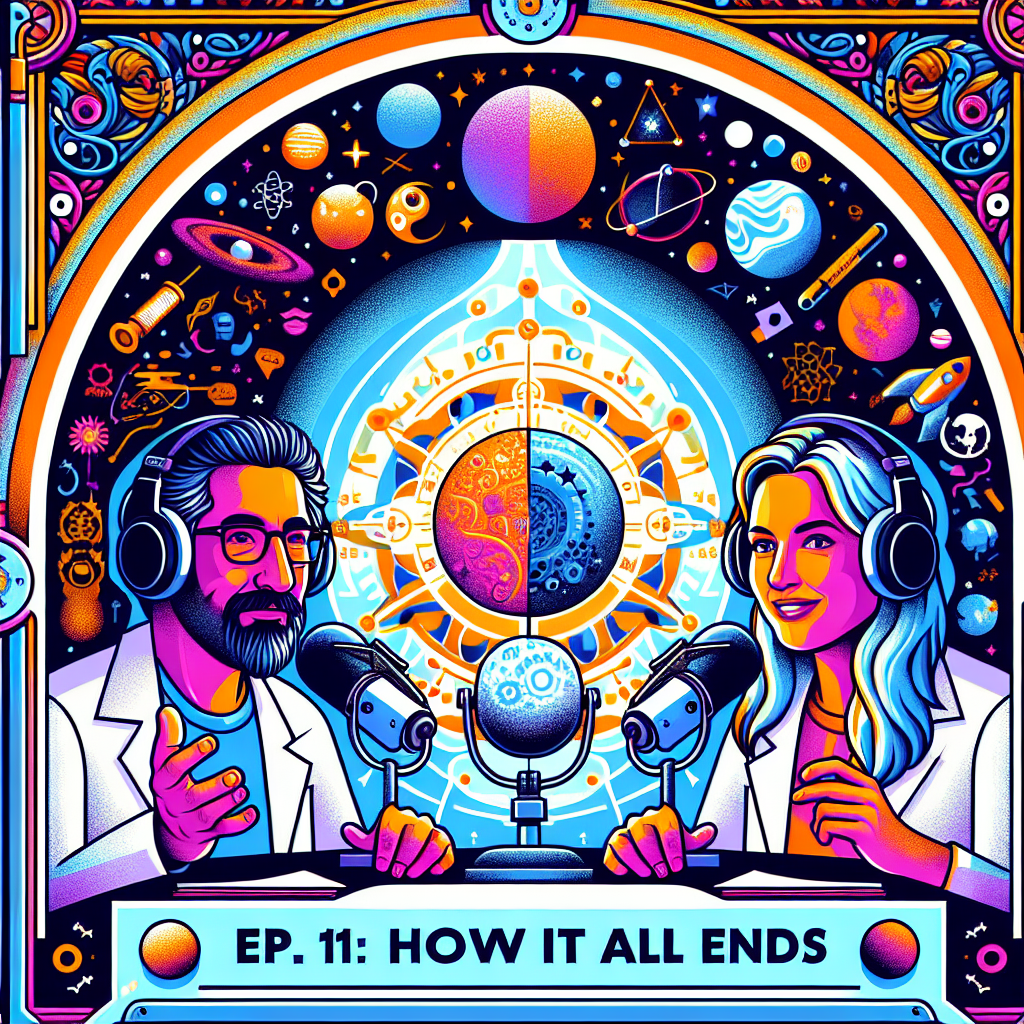
Ep. 11: How It All Ends
In the final episode of the podcast, hosts Dr. Mac and Katie explore the ultimate fate of the universe, reflecting on their journey through cosmic history. They discuss various theories surrounding th...
Ep. 11: How It All Ends
Culture •
0:00 / 0:00
Interactive Transcript
spk_0
You're listening to a Complexly podcast.
spk_0
Dr. Mac, we're at the last episode of our podcast.
spk_0
We are at the last and I am so sad.
spk_0
I've been really enjoying these conversations.
spk_0
It's meant so much to me.
spk_0
I've never learned nearly this much from a project.
spk_0
And I just have really treasured our conversations.
spk_0
And I'm looking forward to this one because this time we get to,
spk_0
we get to go to the end.
spk_0
Yeah. Yeah.
spk_0
Yeah, the real, the, the real end, the absolute end.
spk_0
Well, we have finally arrived.
spk_0
Katie has walked us through the entire history of the universe in just 10
spk_0
delightful and sometimes dread inducing episodes.
spk_0
She carried us through cosmic inflation, recombination, the dark ages,
spk_0
the formation of the first stars.
spk_0
And she did all of this with great patience and camaraderie.
spk_0
She even taught us about what the future holds for our universe.
spk_0
But all things must end.
spk_0
And that includes both this podcast and the universe.
spk_0
While the podcast conclusion is simple and finite,
spk_0
the universe is much less so.
spk_0
We can't predict exactly how it will all end,
spk_0
but there are a few strong possibilities,
spk_0
some more disconcerting than others.
spk_0
This is one of the things that people ask me about.
spk_0
Does the universe have to end?
spk_0
And like as far as we know,
spk_0
the laws of physics just are not okay with the idea of everything kind of
spk_0
staying as it is forever.
spk_0
I mean, one of the things that you run into is the second law of thermodynamics.
spk_0
And that's this statement that entropy,
spk_0
which is sort of another way of thinking about disorder.
spk_0
Increases into the future.
spk_0
That's why you can't have a perpetual motion machine or something like that.
spk_0
If you make an extremely efficient spinning wheel or something,
spk_0
at some point there's going to be a little bit of energy loss through heat to the atmosphere.
spk_0
And it's going to slow down and it's going to stop.
spk_0
spk_0
And that's the second law of thermodynamics that everything kind of evolves toward decay one way or another.
spk_0
And so you can't really get away from that.
spk_0
You know, even if the universe were not expanding,
spk_0
even if everything were kind of staying stable in some sense,
spk_0
things would get eventually less livable.
spk_0
You know, stars would use up their fuel and burn out and particles would decay.
spk_0
And you would eventually get to something that looks like an end.
spk_0
And we've seen the evolution of the universe so far has been changing.
spk_0
The livability of the cosmos has been changing over time.
spk_0
You know, the very beginning and wasn't livable because it was too hot and dense and plasma everywhere.
spk_0
And then there was a stage of this peak of star formation cosmic noon.
spk_0
There was lots of stuff going on, galaxies and everything.
spk_0
And since then, it's been evolving toward sort of cooling down phase, right?
spk_0
The amount of star formation is reduced.
spk_0
You know, galaxies are sort of drifting apart from each other.
spk_0
Except for in dramedo.
spk_0
Well, yeah.
spk_0
Yeah, the distant galaxies are drifting apart.
spk_0
Easy for you to say galaxies are drifting apart from each other.
spk_0
We're going to get hit by one.
spk_0
Yes, yes.
spk_0
Yeah, that really bummed me out when I found out about that.
spk_0
But it turns out that it's just one bummer among many.
spk_0
I mean, it'll be cool.
spk_0
It'll be, you know, impressive when it happens.
spk_0
Well, to be fair, it won't be my issue.
spk_0
And it likely won't be our issue as a species.
spk_0
Yeah, some distance civilization will get to add one more, you know,
spk_0
cool interacting set of galaxies to their catalog.
spk_0
I mean, it'll be neat.
spk_0
Anyway, there's just isn't really a mechanism to like replenish
spk_0
the order in the universe, right?
spk_0
Things will evolve somehow toward an end.
spk_0
And when I say an end of the universe, you know,
spk_0
this is the other thing that I want to emphasize about the end of the universe,
spk_0
is that I don't necessarily mean existence of all kind comes to an end.
spk_0
I mean, that everything that's in the universe that, you know,
spk_0
has any kind of structure is destroyed, right?
spk_0
That is inevitable.
spk_0
You know, whichever way you go, that happens.
spk_0
There are some ends of the universe in which, in some sense, space time still exists,
spk_0
you know, and maybe some energy still exists, but like,
spk_0
everything that is now is destroyed.
spk_0
That will happen as far as we know, as we, as in the way that we understand physics right now.
spk_0
Okay.
spk_0
So walk me through our sun is a white dwarf.
spk_0
We are probably pollution inside that white dwarf.
spk_0
And almost all the stars that have ever been born,
spk_0
or will ever be born, are already burning.
spk_0
Yes.
spk_0
Or have already burned out.
spk_0
And then what happens?
spk_0
So I think last time we talked about how, as the expansion continues,
spk_0
distant galaxies get farther and farther away and move away more and more quickly.
spk_0
And so we stop being able to see them.
spk_0
Right.
spk_0
The JWST instead of seeing what it's seeing, we'll see nothing.
spk_0
Yeah.
spk_0
So you get to a point where we don't have any view of the distant universe.
spk_0
And we don't have any view of like the past of the universe either,
spk_0
because we can't see things in the distance, so we can't see things in the past.
spk_0
We can only see kind of see our immediate surroundings and everything else.
spk_0
It's just dark.
spk_0
So you get to a point where there's not much to look at.
spk_0
And then what happens from there?
spk_0
I mean, that's like 100 billion years.
spk_0
That's a reasonable extrapolation from what we know now.
spk_0
But there are kind of different possibilities that can happen that depend
spk_0
partially on what dark energy is doing.
spk_0
And those can change the story either after that stage or maybe somewhat before.
spk_0
But the idea that we do get to a point where we're just looking out into the dark
spk_0
is pretty likely based on our current understanding.
spk_0
Okay.
spk_0
But because we don't know what dark energy is and we don't know how it's going to change over time
spk_0
potentially, there are a few possibilities that are still kind of in play,
spk_0
at least in terms of like matching our observations as we extrapolate into the future.
spk_0
In my book, I talked about five different endings of the universe.
spk_0
So I can just kind of go through those three of them have to do with what dark energy is doing
spk_0
and then two are kind of wild cards.
spk_0
Great for other things.
spk_0
So, okay.
spk_0
So when we've talked about dark energy before, we've talked about the fact that
spk_0
our kind of best guess about dark energy is that it's a cosmological constant.
spk_0
It's something that Einstein first wrote down and he wrote it down in the service
spk_0
of keeping the universe static.
spk_0
So, he didn't know that the universe was expanding and there had to be some reason
spk_0
while the stars didn't fall down on us.
spk_0
Basically, it was the way he was thinking because he knew that gravity should attract everything
spk_0
together.
spk_0
And so he put in this term in his equations of gravity that kind of added a sort of
spk_0
pushing apart in addition to the pulling together of gravity.
spk_0
And so it just imbues every bit of space time with this little bit of kind of swelling or
spk_0
stretchingness so that in the picture that he was putting together, all the gravity of all the
spk_0
stuff falling together would be perfectly balanced by this pushing a part that's just inherent
spk_0
to space time.
spk_0
And that would keep the universe static.
spk_0
But it turns out it's not static because dark energy and gravity don't perfectly match
spk_0
each other.
spk_0
Well, it's not static.
spk_0
I mean, the universe is expanding.
spk_0
So when it was found that the universe was expanding that throughout the whole static idea.
spk_0
And that naturally explained why everything hasn't fallen into a big clump because it's been
spk_0
expanding since the beginning.
spk_0
And so, you know, you can think of it in some sense as those momentum of things moving apart.
spk_0
So they threw out, you know, I signed throughout the cosmological constant when it was discovered
spk_0
the universe was expanding.
spk_0
Didn't need anything to hold the stars up anymore.
spk_0
But when we discovered that the expansion of the universe was speeding up,
spk_0
then we had to have some reason why the expansion was speeding up because gravity wouldn't do that.
spk_0
Right.
spk_0
Okay.
spk_0
In a universe with just stuff and gravity, the gravity of everything should be putting the breaks
spk_0
on the expansion.
spk_0
Right.
spk_0
Maybe the expansion is happening, but everything is pulling together and it should slow down the
spk_0
expansion.
spk_0
But when it was found that the expansion was not slowing down, you know, astronomers had to throw in
spk_0
something to make that the expansion accelerate.
spk_0
And the cosmological constant was right there.
spk_0
Right.
spk_0
It was this mechanism.
spk_0
It was already hypothesized.
spk_0
You put it into the equations.
spk_0
Space time has a little bit of stretchiness in it.
spk_0
And that means that when you get to a certain point as, you know, the expansion is set off by the
spk_0
big bang, everything's moving away from everything else.
spk_0
At some point, you know, and it's it is slowing down at the beginning because the gravity is
spk_0
working to slow down the expansion.
spk_0
But when things get far enough apart that that gravity is very weak, then the stretchiness of space
spk_0
kind of takes over as the dominant effect.
spk_0
And that makes everything speed up accelerate.
spk_0
And that makes the expansion accelerate.
spk_0
So the idea of a cosmological constant fits the data pretty well.
spk_0
There are very few sort of pieces of data that don't seem to favor just the idea that the expansion
spk_0
is this cosmological constant, which is where, you know, every little bit of space has a little
spk_0
bit of stretchiness built in.
spk_0
It's the same amount everywhere.
spk_0
So, you know, it's called the constant because the density of this stretchiness stuff is constant.
spk_0
Right.
spk_0
The density of cosmological constant is constant.
spk_0
There's more space.
spk_0
There's more cosmological constant.
spk_0
It becomes more important over time.
spk_0
That's an idea for what this, you know, so-called dark energy could be.
spk_0
Is whatever it is, is making the universe expand faster.
spk_0
We call that dark energy.
spk_0
Maybe it's a cosmological constant.
spk_0
But it could be something else.
spk_0
Right.
spk_0
And if it's something else, if it's like some kind of new dynamical field, energy field in the universe,
spk_0
like we have hypotheses for energy fields that could affect space-time expansion.
spk_0
And you can set something up where you have some kind of energy field in the universe that
spk_0
causes space-time to expand faster.
spk_0
And we invoke that when we talk about cosmic inflation.
spk_0
So this very rapid expansion to the very early universe that we say was driven by an energy field.
spk_0
We call it the inflaton field.
spk_0
And it's-
spk_0
The worst.
spk_0
Yeah, I know it's terrible.
spk_0
But it's what we call a scalar field, meaning that it's a field with like a certain value
spk_0
associated with it everywhere, which is-
spk_0
I'm only getting into this because I'm going to come back to scalar fields later.
spk_0
But a scalar field is like, if you look at the temperature in a room,
spk_0
you can assign a temperature to every point in the room, that's a scalar field.
spk_0
You're just giving a number everywhere.
spk_0
Okay.
spk_0
Okay.
spk_0
And so-
spk_0
So a scalar field is a field where there's just a number everywhere.
spk_0
Unlike, you know, a electric field or something where there's a number,
spk_0
but there's also a direction of the field in every direction.
spk_0
That's a vector field.
spk_0
Okay.
spk_0
So a scalar field is-
spk_0
There's-
spk_0
Is the temperature the same in every part of the room?
spk_0
Um, not necessarily.
spk_0
So the number could be different that's associated with it, but there's a-
spk_0
There's a number associated with every part of the room, and that's the field.
spk_0
Yeah.
spk_0
And it-
spk_0
But it's not heading in any particular direction.
spk_0
Exactly.
spk_0
Exactly.
spk_0
Okay.
spk_0
Yeah.
spk_0
Whereas you can measure the electric field everywhere in a room, but there would be-
spk_0
It'd be pointing some direction, right?
spk_0
Right, right.
spk_0
It'd be going somewhere.
spk_0
Yeah, yeah.
spk_0
Yeah.
spk_0
Yeah.
spk_0
Okay.
spk_0
Anyway, so there could be a scalar field in the universe that is-
spk_0
The dark energy.
spk_0
Right.
spk_0
That is affecting the expansion rate, and it could just happen to look like a
spk_0
cosmological constant in the way that it's acting on the universe right now.
spk_0
That doesn't seem so likely, but we can't rule it out.
spk_0
I mean, to me, it doesn't seem so likely to others.
spk_0
It seems like the most likely thing it varies, right?
spk_0
Like how-
spk_0
What kind of-
spk_0
How you evaluate this stuff?
spk_0
So because we don't know what dark energy is,
spk_0
there's a level of ambiguity in the deep, deep future of the universe,
spk_0
but we can kind of put together a certain set of possibilities based on what dark energy might be.
spk_0
And that's really what you do in your book.
spk_0
The end of everything, astrophysically speaking,
spk_0
is look at these different versions of what the end of the universe might look like,
spk_0
depending on what dark energy proves to be.
spk_0
Yes, exactly, exactly.
spk_0
And so there are kind of-
spk_0
There are kind of three things that dark energy could do, right?
spk_0
It could become more powerful in its sort of expansionness, right?
spk_0
It could become less powerful in its expansionness,
spk_0
maybe even like cause contraction instead,
spk_0
if it's something that's just messing with the way space-time moves,
spk_0
or it could be constant the way that a cosmological constant is.
spk_0
So does the universe have to end?
spk_0
Unfortunately, the laws of physics say yes,
spk_0
at least in the way we think of the universe as containing structure and order.
spk_0
The question is not if, but how.
spk_0
And to answer that question, it might help us to look at dark energy,
spk_0
that mysterious force causing the universe to expand faster,
spk_0
which Einstein accidentally took note of when he hypothesized the cosmological constant.
spk_0
But dark energy could also take the form of a scalar field.
spk_0
So because we don't know what dark energy is, or how it might change,
spk_0
we have a few different potential options to consider for how all this ends.
spk_0
So right now the dark energy is causing the expansion to accelerate,
spk_0
but it could fade away in some sense,
spk_0
or it could be something that changes over time.
spk_0
It could even be something that somehow turns around and causes compression.
spk_0
So there's a little bit of a hint, and this is very recent,
spk_0
but there's a little bit of a hint from a recent galaxy survey called
spk_0
Desi, the dark energy spectroscopic instrument.
spk_0
They did a galaxy survey.
spk_0
You guys love your acronyms.
spk_0
I know.
spk_0
I love an acronym over there.
spk_0
Yeah, yeah.
spk_0
So they, in their first data release,
spk_0
they found sort of tentative indications that maybe dark energy is getting less powerful over time.
spk_0
Oh, it's not clear because it's just, it's the first data release.
spk_0
It's not a, like, the significance of the result is not high.
spk_0
You know, it involves bringing in data from other surveys as well to get this result.
spk_0
But, you know, it's possible that dark energy is somehow getting less powerful over time.
spk_0
If it got so much less powerful that it not only turned off,
spk_0
but started to reverse, which, and I don't know what kind of theories will do this,
spk_0
but you can imagine a theory that could do this.
spk_0
You can imagine a situation where the expansion of the universe
spk_0
stops accelerating, stops happening, where the expansion stops,
spk_0
and everything starts falling together again.
spk_0
And then you would end up with what's called a big crunch.
spk_0
Good name.
spk_0
Yes, yeah.
spk_0
And the big crunch, even before dark energy was thought about,
spk_0
the big crunch was an idea that was popular, like, in the 1960s,
spk_0
when we knew the universe was expanding.
spk_0
But we didn't know if it was going to continue expanding forever or stop or turn around.
spk_0
And the data at the time, which was not as, you know,
spk_0
accurate as the data we have now, sort of hinted toward collapse, right?
spk_0
Hinted toward the idea that the expansion was going to someday stop and turn around.
spk_0
Just basically the idea was that, you know, the big bang set off the expansion,
spk_0
but there's so much matter in the universe that it's,
spk_0
it's going to slow the expansion down so much that it'll stop and everything will fall together again.
spk_0
That was the hypothesis.
spk_0
And now that we know that the expansion is accelerating,
spk_0
that doesn't seem to make sense.
spk_0
There's not enough matter to do that,
spk_0
but maybe dark energy could make that turn around.
spk_0
So, to me, so I'm going to talk about five different ends of the universe.
spk_0
To me, a big crunch is the scariest one.
spk_0
Really?
spk_0
I don't think it's very likely it's not something where the theories are really pushing that direction in any way.
spk_0
But to me, it's the scariest one for a couple of reasons.
spk_0
One, like you would see it coming, right?
spk_0
So, at some point, we would start to measure the red shifts of distant galaxies and clusters and things.
spk_0
And we would start to see that things are not red shifted anymore.
spk_0
They're not the light isn't being stretched out by expansion anymore.
spk_0
It's starting to be blue shifted so the light is being compressed to higher frequencies.
spk_0
And then you know that these galaxies are coming for you.
spk_0
Yeah.
spk_0
The way that I know Andromeda is coming for us, thanks to you.
spk_0
And so all of the galaxies are kind of coming for you.
spk_0
Yeah. So you would see everything's coming for you.
spk_0
And so the fact that you're going to get hit by a bunch of galaxies is disconcerting.
spk_0
But it's actually worse than that because also space is going to get hotter.
spk_0
Oh.
spk_0
So, you know, we talked about the cosmic microwave background back in the early days of the universe
spk_0
when everything was hot and dense.
spk_0
Like, space itself was hot.
spk_0
It was filled with hot plasma.
spk_0
And we can see that when we look at the cosmic microwave background,
spk_0
we can look far enough away to see that hot glowing universe.
spk_0
So if you compress the universe again, then all of that energy gets compressed again.
spk_0
And you start to get back toward that hot glowing plasma stage where just everything,
spk_0
all the light from the cosmic microwave background that we see now has been redshifted a lot.
spk_0
It's been stretched out by the expansion of the universe to microwave wavelengths.
spk_0
But it would be compressed again until it came back to like visible, you know, ultraviolet wavelengths,
spk_0
like hotter and hotter, like higher and higher energy light.
spk_0
Like climate change, but for the universe?
spk_0
Yeah. But it's even worse because it's not just like the background light that would be
spk_0
compressed and hardened radiation.
spk_0
It's also all of the light from all the stars that I've ever shown, right?
spk_0
All of the supernova explosions, all the black hole outflows, all these high energy photons
spk_0
that have been thrown out into the universe because of all of the astrophysics that's ever happened.
spk_0
All of that light would also be compressed into a smaller space and also be shifted into higher
spk_0
frequencies, harder radiation. And so it's been calculated. There's Martin Ries, who's the astronomer
spk_0
royal of the UK, I guess, or of England. I'm not sure. Anyway, you did a paper in, I don't know,
spk_0
the early 70s or something, maybe 69, where he calculated what would happen
spk_0
big crunch and found that you can get to a point where the ambient radiation in space is so hot
spk_0
and so high frequency and so there's so high density of radiation, that at some point it would
spk_0
start to ignite thermonuclear explosions on the surfaces of stars. Like there would just be so
spk_0
much energy in space. Oh, God. Yeah. Yeah. So like the idea of insisting in a universe where
spk_0
you know that's coming, that's terrifying to me. I do not like that. Okay. I agree. I agree. That
spk_0
thermonuclear explosions happening on the surface of all the stars sound stressful, agreed, but
spk_0
counterargument. Is it possible that in a big crunch, things go back to being a hot dense soup
spk_0
for a long time and then eventually the soup becomes hot and dense enough that there's another
spk_0
big bang. An accordion style recreation of the universe. So in a generic big crunch, you don't have
spk_0
a new beginning. It just ends. It goes through singularity and you can't really do much with that.
spk_0
That's a hard stop in an equation. That's a full stop at the end of that sentence.
spk_0
It's just and we'll talk later about different ideas for cosmologies that do have a new beginning,
spk_0
but a standard big crunch is not one of them. You know what I just realized?
spk_0
When you said that, I realized that in some future Wikipedia, some theoretical Wikipedia,
spk_0
like I always think the most beautiful two words in English are from the Wikipedia article on small
spk_0
pox, which begins smallpox was. Nice. Yeah. I just think it's the most impressive thing we've ever
spk_0
done, right? Yeah. Yeah. But given the fullness of time, every Wikipedia article will be past tense.
spk_0
Hmm. Yeah. Yeah. So yeah, here's to doing the best job that we can do to make the ones we want to
spk_0
be past tense in terms of Wikipedia articles past tense and the ones we want to be present tense,
spk_0
Wikipedia articles present tense. Sounds good. Yeah.
spk_0
So right now something like 70% of the energy density of the universe is in dark energy,
spk_0
whatever dark energy is. In the past, it was less because the universe was more dense with matter.
spk_0
And so most of the energy density of the universe was in matter. At the very beginning, it was
spk_0
mostly radiation, you know, most of the energy density universe was radiation. So we had a radiation
spk_0
era. We had a matter era. Now we're really in a dark energy era, right? So right now, the bulk of the
spk_0
sort of evolution of the universe is governed by dark energy. We call it dark energy domination.
spk_0
Oh, that's good. That's really good. Good. That's how I feel like you should be credited for that.
spk_0
It's a good one. I like that one. Yeah. So, you know, if dark energy is a cosmological constant,
spk_0
then we know what that's going to go. Like we get to that stage where in 100 billion years,
spk_0
we can't see galaxies anymore. And it just keeps everything just keeps diffusing.
spk_0
The accelerated expansion becomes, you know, just that's what's happening. And the matter in the
spk_0
universe becomes less and less and less and less important. Right now, you know, matter is
spk_0
something like 30% of the universe. It'll become, you know, 5% of the universe. It'll become 1% of
spk_0
the universe. It'll become just very unimportant. And we'll evolve toward the universe that's just
spk_0
got this accelerated expansion, exponential expansion going. And as that happens, like, you know,
spk_0
all of the other galaxies will be out of contact with us in the sense of being too far away to
spk_0
see or moving away too quickly to see there's a certain distance out to which we will be able to
spk_0
get information and not beyond that. And the stuff in our galaxy was left of our galaxy, you know,
spk_0
the sort of milk drometer, the combination of and drometer and us. Those stars will be burning out.
spk_0
Right. So the stars will burn out, you know, trillions of years, you, the stars will be burning out,
spk_0
even the little, the small ones that burn real slow, the red dwarfs, those will start to burn out.
spk_0
The white dwarfs will fade away. They'll get cold and fade away. Black holes will start to evaporate.
spk_0
So, oh, black holes. We talked about this a little bit in the black hole episode, but black holes have
spk_0
this Hawking Evaporation process where they can lose mass through radiation. That'll happen to all
spk_0
the black holes. The black holes will evaporate away into radiation. Everything's going to kind of decay
spk_0
into radiation. I talked about the Second Law of Thermodynamics. Everything kind of decays into
spk_0
waste heat, right? And so the universe will be kind of very, very diffuse and with just this little
spk_0
bit of background radiation from all the stuff that's decaying in it. At some point, probably particles
spk_0
will decay. I mean, a lot of particles are already unstable, but protons, we've never seen
spk_0
it proton decay, but we think that those will probably decay eventually as well. In some very large
spk_0
number of years, 10 to the 40 year something that protons will start to decay. Oh, wow. And so at some
spk_0
point, you get to the stage where there's, there's just kind of nothing left. The radiation from
spk_0
everything decaying will kind of diffuse away, but there'll be a little radiation associated with
spk_0
the kind of horizon of the universe. It's called a dissider horizon. It's kind of a shell around us,
spk_0
as associated with the way that the space time is expanding, but there'll be a tiny, tiny bit of
spk_0
radiation from that. But like the temperature is something like 10 to the minus 40 Kelvin or something
spk_0
like very, very close to absolute zero. Wow. And so the universe will just be this very, very cold,
spk_0
dark, empty place. And because the Second Law of Thermodynamics says that entropy is always
spk_0
increasing over time, the entropy will keep increasing until it gets to like this maximum point,
spk_0
right, where the disorder can't get any higher. Everything is already decayed. And when you get to
spk_0
that maximum entropy point, that's called the heat deaths of the universe, where heat here is
spk_0
kind of referring to something about sort of the way that the energy is distributed. And it's a
spk_0
death because once the entropy is maximized, kind of nothing important can happen again. In some
spk_0
sense, like there can be random fluctuations. Like you can have it so that some of these photons
spk_0
that are floating around can occasionally randomly run into each other. And you can have particles
spk_0
kind of fluctuating up from the vacuum. And if you wait long enough, then things will kind of appear
spk_0
and disappear through just random fluctuations. But you can't have structure because that would be
spk_0
a decrease in entropy, right? So you can only have very temporary little fluctuations downward in
spk_0
entropy. But you know, everything is already fully entropized or in a way that's what the word is
spk_0
entrophic. Yeah. And so in a sense, you like not only does nothing important happen probably,
spk_0
but also like you kind of lose the arrow of time. Like time stops having a direction because the
spk_0
way that we define the future is the future is the direction in which entropy is increasing.
spk_0
But if entropy can't increase anymore, then you don't really have a future. Yeah,
spk_0
the well, there's time, I mean, there's sort of time in a sense, but it's not passing in any
spk_0
particular direction. Whoa, whoa, whoa, whoa, whoa, whoa, whoa, whoa, whoa, time is just a measure of
spk_0
entropy increasing. Well, the concept we have as the future is the direction in which entropy increases.
spk_0
Space time will still exist in this universe. But isn't the past also just a less entropic
spk_0
universe? Yeah, yeah. So isn't the that's all that time is is just whether how ordered things are?
spk_0
It's a way of defining the arrow of time. It's not a way of defining time itself, I wouldn't say,
spk_0
because time itself is kind of tied up in space time as a concept. But you know, when people
spk_0
talk about the arrow of time, like, why is the future different from the past? Because in a lot of
spk_0
equations, it doesn't seem like it should make sense. The only thing that really determines the
spk_0
difference between the future and the past is entropy. Okay. I'm going to try not to let that
spk_0
freak me out. Okay. Yeah. So one of the cool things though about this is you get to this like
spk_0
steady state, basically, where the expansion is just exponential, the entropy is maximized.
spk_0
There have been some suggestions by some theorists that maybe, maybe you could have these
spk_0
random fluctuations. I mean, if this goes on forever, then you have this situation where kind of
spk_0
anything that can happen will eventually. Right. And just like if you had a box of gas particles,
spk_0
they're just moving around randomly every once in a while, very rarely, but every once in a while,
spk_0
they're all going to gather in one corner for like a split second. Right. It's not going to happen
spk_0
very often, but there's a kind of recurrence time period you can calculate for when that will happen.
spk_0
And every, you know, trillion years or something, they'll all collect in that corner and then they'll,
spk_0
you know, on average, right, just from random fluctuations. And so you can kind of do this with
spk_0
the universe. You can kind of imagine the universe as this box of particles. And you can work out like
spk_0
how often it'll happen or how long you'd have to wait for something to appear. So some colleagues in
spk_0
mine, I think Sean Carroll was one of the one of them on this paper. They calculated at some point
spk_0
in this sort of end stage heat death universe, how long it would take for a grand piano to assemble
spk_0
itself out of the vacuum. It's just randomly. And they got some number. I don't remember what
spk_0
the number is, but it's very large. Is this like trying to wait until the little DVD sign, not to date
spk_0
myself when you would have a DVD in your television and you weren't watching television, there would be
spk_0
like a little DVD sign that go around the edges of the screen. And then once every great while, it would
spk_0
hit the absolute corner instead of like bouncing off two walls, it would hit the corner. It's kind
spk_0
of like that. But then you've got to wait until all these particles are hitting the corner at the same
spk_0
time to make a grand piano. Yeah. Yeah. But like theoretically, like if everything that could happen will
spk_0
happen, a grand piano will be made, will a monkey be made? Like I guess we'll biology happen again?
spk_0
Yeah. So there's a way of calculating this where you can work out like the whole universe will
spk_0
recur. Right? So this is this, this is this, this is this idea of Poincarei recurrence. You have
spk_0
this situation, this hypothesis that in that sort of setup, if you wait long enough, every point in
spk_0
the past of the universe is contained in this kind of possibility set of things that could happen to
spk_0
the universe. And so, you know, we're dealing with the opportunities here. This moment right now
spk_0
could occur again, you know, in some vastly distant point in the heat death, except, you know, in
spk_0
that point, maybe it would be this moment exactly. And then we would just evolve into a new heat death
spk_0
over trillions and trillions and trillions of years. But maybe this moment would occur, but in the
spk_0
future recurrence, you know, I'm wearing green shirt and you're wearing a red one, right?
spk_0
Whoa. So the point like, and that's the power of just quantum fluctuation.
spk_0
Yeah, yeah, or just statistical fluctuations.
spk_0
Statistical fluctuation and a tremendous amount of time.
spk_0
Yeah, exactly, exactly. It's like a bunch of monkeys in a room with typewriters will eventually
spk_0
write Hamlet, except the whole universe. Yeah, yeah. And so some people have suggested this as a way
spk_0
of having a new universe come out of the heat death is just you'd randomly fluctuate a big bang.
spk_0
But you could also randomly fluctuate any point in time in the universe. But then you get into,
spk_0
you get into a problem. It's called the Boltzmann brain problem. This is one of my favorite things
spk_0
in physics. So let's say that you want to randomly fluctuate a big bang from this heat death
spk_0
universe. Well, you're much more likely or much more often, you're going to randomly fluctuate
spk_0
just like a single galaxy, because that's just that's less, you know, this is more likely.
spk_0
Less hard. Yeah, yeah. But then, you know, you're also kind of more likely to randomly
spk_0
fluctuate just one planet. Totally. Right. With its atmosphere. And then you're more likely to
spk_0
randomly fluctuate just one person. Right. And you're more likely to randomly fluctuate just
spk_0
just a brain, just a single human brain that thinks it has experienced the universe.
spk_0
Right. And this is the Boltzmann brain problem, because when you work out those probabilities,
spk_0
more likely than we have fluctuated as a big bang out of the vacuum of space is that
spk_0
one human mind has fluctuated imagining that the whole universe exists.
spk_0
Vastly more likely. Yeah. Yeah. Which is not to say, you know, that it actually is true that we're
spk_0
imagining the whole universe. But it's kind of just bringing up this contradiction where these
spk_0
calculations no longer are really viable, because you're going to hit that we're just imagining
spk_0
before you're going to hit, we've actually done it. That makes my head hurt. And it makes me afraid
spk_0
that I'm trapped in someone else's imagination. Yeah. Which I often feel. Right. Yeah. It's like
spk_0
solopsism as the term, right? It's like this ultimate victory for that concept.
spk_0
And it. But it's really the idea of the Boltzmann brain scenario was brought up just as a kind of
spk_0
way to point out that this is not a good way of doing these probabilities. Right. Right.
spk_0
Because you're going to run into that problem. It wasn't ever a real suggestion. Right. Okay.
spk_0
You know, that we are in a simulation. Yes. Yeah. Anyway, that's the heat death.
spk_0
So now we know what happens if dark energy reverses. We know what happens if dark energy is a
spk_0
constant, which is the heat death of the universe, which is a little mind bendy. But you know,
spk_0
as endings go, doesn't seem like the worst to me. No, it's very gentle. It's very gentle.
spk_0
It's that T.S. Eliot poem. This is how the world ends not with a bang, but with a whimper. It's just
spk_0
the lights turn out. It's almost like I was thinking that like if I left all the lights in my house on
spk_0
and just walked out of my house for the next 20 years, I'd come back and all the lights would be out.
spk_0
And that's the end of the universe. Yeah. Yeah. And I know that a lot of times when I talk about
spk_0
the heat death as an ending, people find it really sad. One of my colleagues,
spk_0
Roni Appieres, interviewed her for the book and she said that when she gives talks on that,
spk_0
people sometimes cry. Like the idea that the universe fades out and everything ends in cold and
spk_0
darkness. But I think it's, you know, it's the best you can do and things could be so much worse.
spk_0
You know, you could get a big crunch. You could have a big crunch and you could see the end
spk_0
coming at you. Yeah, you'd see you coming. Yeah. Yeah.
spk_0
Things could be so much worse. Let us carry that hope with us even if it is the hope of a
spk_0
temporary species in a temporary universe. How will we ever find peace of mind in a life so
spk_0
fleeting? Well, that is of course why there's life insurance. That's right. It's our last episode,
spk_0
which also means it's our last policy genius ad. God, I love policy genius. With policy genius,
spk_0
you can find life insurance policies that start at just $292 per year for one million dollars of
spk_0
coverage. Some options offer same day approval and avoid unnecessary medical exams.
spk_0
Planning ahead is crucial in life, especially when it comes to what happens when you're gone.
spk_0
And if we've earned anything from this podcast, it's that we will all be gone in the fullness of time.
spk_0
Policy geniuses that the country's leading online insurance marketplace. And since they don't
spk_0
have an incentive to recommend one insurer over another, their advice is unbiased. So check out policy
spk_0
genius. It's never too late to plan ahead. Head to policygenius.com slash crash course or click
spk_0
the link in the description to get your free life insurance quotes to see how much you could save.
spk_0
That's policygenius.com slash crash course.
spk_0
What's briefly recap the first two theories of how the universe ends? First, if dark energy is
spk_0
what's responsible for the expansion of the universe, what would happen if it became less powerful?
spk_0
It's possible that dark energy is decreasing over time, so if it started to lose so much power that
spk_0
it not only stopped but began to reverse, the universe would stop expanding and instead start
spk_0
falling together again. Space would become much hotter as energy is compressed, and we would know
spk_0
the end of everything was coming because we would perceive light as blue shifting rather than red
spk_0
shifting. We call this the big crunch for reasons I am uncomfortable with. I'd much prefer to
spk_0
think of it as a brand of granola or like a breakfast cereal. But what if dark energy didn't get
spk_0
more or less powerful? What if it remained a cosmological constant? Well, we call this outcome
spk_0
heat death, which sounds like a heavy metal band but is in fact a gentle quiet way to end the
spk_0
universe. It would continue to expand and everything would become increasingly more diffuse,
spk_0
matter itself becoming essentially negligible. Stars would burn out, black holes would evaporate,
spk_0
and eventually entropy would reach its maximum value, and the universe would reach a thermodynamic
spk_0
equilibrium suffering a heat death, meaning that nothing can really happen anymore. Time stops
spk_0
having a direction, and everything that was going to happen already did. Despite how bleak that
spk_0
sounds, I actually don't mind that one. I'd take a heat death over a big crunch any day,
spk_0
but those aren't the only potential outcomes. So there's this idea that if the dark energy is
spk_0
some kind of dynamical field, then there's a possibility, and it's not a it's not a possibility
spk_0
that's here is like because it messes with certain sort of energy conditions that seem important,
spk_0
but maybe instead of just being constant in space, it builds up in space. So with a cosmological
spk_0
constant, if you define like a sphere, if you just define an imaginative sphere in space,
spk_0
the amount of cosmological constant in that sphere is never going to increase,
spk_0
because it's the same amount of space, even as the universe expands, you've defined, you know,
spk_0
at one mega-parsec sphere around your galaxy or something, you're not going to get more dark energy
spk_0
in that sphere. So in that case, like if there's a galaxy in the universe, that galaxy is not going
spk_0
to be torn apart by the expansion of the universe, because in that region, the matter already won,
spk_0
you know, like the matter already is more important than the stretchiness of the dark energy
spk_0
in that sphere. There's not going to be more dark energy in that sphere. So it's a bound structure,
spk_0
it's not going to expand. It's like, you know, the universe is expanding, but this room is not
spk_0
expanding, because in this room, the binding energy of all the stuff is more important than the
spk_0
little bit of stretchingness of space, right? So you can imagine a kind of dark energy, they call
spk_0
it phantom dark energy, in which the dark energy increases in every part of space, the density of
spk_0
dark energy or the expansion of dark energy increases in every part of space. And if you work that out,
spk_0
it turns out that that will eventually destroy the universe, and the way it does that is that it
spk_0
builds up within already bound structures. So let's say you have, you know, a cluster of galaxies,
spk_0
they're bound by gravity. If the dark energy is increasing, it's going to kind of pull the
spk_0
galaxies out of that galaxy cluster. It destroys the universe from the outside in the
spk_0
sense of like large scales to small. So if the dark energy is building up in space, first it's going
spk_0
to pull apart things that are like the most weekly bound, so like clusters of galaxies, then it'll
spk_0
start getting to galaxies. So it'll start like pulling apart, taking stars out of galaxies,
spk_0
sort of unraveling galaxies. Then it'll go into solar systems, it'll take the planets away from
spk_0
the Sun. And then as it continues to build up and build up, it can start breaking apart solid
spk_0
objects. So you can break apart the Earth and then break apart, you know, atomic molecular bonds.
spk_0
And then eventually you get to a point and you can calculate for a given model, you get to a point
spk_0
where the scale factor of the universe goes infinite. So the scale factor is a number that tells you
spk_0
about the size of the universe, how much is expanding. So the scale factor today is one,
spk_0
some number of billions of years ago, it was 0.5, the universe was smaller, that kind of just scales
spk_0
like how big space time is. So in a finite time, you can calculate the scale factor will go infinite,
spk_0
which just means that space is expanding so much that it just completely rips apart. And that's
spk_0
called the big rip. That's called the big rip, which is another really good name. Yeah. Yeah.
spk_0
I just think we need to complement the far future cosmologists as opposed to the far past
spk_0
cosmologists for just in general doing a better job with naming. Yeah. Yeah. No inflate
spk_0
ton. Right. Business. Just not no removing a single letter from a word and thinking you've accomplished
spk_0
something. So anyway, and I'm sorry to the person who coined inflate ton. I'm sure they're a nice
spk_0
person. But that's it's not a great name. And I wish you consulted with me. So in this case,
spk_0
in this big rip case, the size of the universe, like the scale of the universe becomes infinite in a
spk_0
finite period of time. Yeah. That is really, really hard to get into my head. Yeah. Yeah. And there are
spk_0
reasons why theorists don't like this scenario because in order for that to happen, you have to
spk_0
break some these kind of energy conditions that we think exist in the universe that prevent
spk_0
stuff like that happening. But if you just put in dark energy with certain characteristics,
spk_0
then you get something that looks like that in the simplest versions of the equations.
spk_0
Okay. When we measure the properties of dark energy, it seems to be completely consistent with
spk_0
a cosmological constant for the most part. Okay. But you know, you can't quite rule out a phantom
spk_0
dark energy. This stuff that would cause a big rip in terms of just the observations, just what
spk_0
you can measure about the equation of state parameter of dark energy, which tells you about
spk_0
kind of how this stuff works. And so you can work out like what the error bars are on the measurement
spk_0
of this, like how uncertain we are about the measurement of this. And in doing that, you can get like
spk_0
a calculation of what's the soonest the big rip could happen if it were going to happen. If dark
spk_0
energy really is not exactly a cosmological constant, but this stuff that gets more powerful.
spk_0
And when you calculate that, we've got at least like 200 billion years. So just based on the way
spk_0
that we can do our calculations. So I mean, 200 billion years, like that's after we already
spk_0
can't see galaxies anymore. So it's like, you know, there's not a lot to rip apart at that stage.
spk_0
I don't know. There's something like, and I know that it won't happen on this scale, but there's
spk_0
something terrifying about looking up into the sky, seeing absolutely darkness, and then like
spk_0
slowly having dark energy rip apart your solar system and then your body. That's true. That's true.
spk_0
That's true. And you can't escape it because it's just space that's doing it, right? So like,
spk_0
right. No matter, you know, you can't like protect yourself from it, like being in a protective
spk_0
casing or something, it'll rip the casing apart. It's just something that's going to happen.
spk_0
That's a little terrifying. It is a little bit terrifying. And again, you would see it coming. So
spk_0
that's not great. So if I'm going to rank these first three, I'm going to say big crunch is the worst.
spk_0
Yeah. Yeah. Heat death is the best. Big rip is the second worst. Yeah. Yeah. I'd say that. I'd
spk_0
say that. I'd agree with you on those.
spk_0
Now there are two more ways that you wrote about that the world might, well, the world will be long,
spk_0
long ended. The universe might end. Walk me through those. Okay. So the next two are vacuum decay
spk_0
and cyclic cosmologies. I'll start with vacuum decay because that is my personal favorite. Okay.
spk_0
Part of the reasons my personal favorite is because technically it could happen at any moment.
spk_0
Oh great. I'm glad that's your personal favorite.
spk_0
Now, and when I say this, I need to give a disclaimer, which is that it almost certainly won't.
spk_0
Sure. And please, you know, do not write us emails being sad about this and scared because
spk_0
this is not a thing to worry about. But just to the audience, because I do get emails from people
spk_0
who are scared about vacuum decay and it's really, I'll explain why not to worry about it. But let
spk_0
me just first walk through what the idea is. So we talked a while back about the Higgs field. So
spk_0
there was this event that happened in the early universe that altered the Higgs field. So the Higgs
spk_0
field is this energy field throughout all space. It's a scalar field like we think caused inflation,
spk_0
like dark energy could be. It's this sort of energy field through space. And it's connected to
spk_0
how particle physics works in our universe. And like the state of the Higgs field, what kind of
spk_0
value it has, what kind of numbers associated with that field connects to what particles can exist
spk_0
in the universe, whether they can have mass, all of that stuff, the setup of the standard model of
spk_0
particle physics. And we think that we're pretty sure that in the beginning of the universe,
spk_0
the Higgs field was in a different state than it is now. There was a transition that happened.
spk_0
And that transition allowed for particles to have mass. It allowed for the particles of the
spk_0
universe in the standard model of particle physics to exist. It allowed for us to have chemistry
spk_0
and bodies and all of that kind of thing, right? Molecules could exist. There is some
spk_0
suggestion based on data that it's possible that Higgs field could change again. And this transition
spk_0
would be like a quantum tunneling event. So quantum tunneling is where if you have like a particle
spk_0
on one side of a barrier, like an electron on one side of a barrier, if you wait long enough,
spk_0
that electron is just going to appear on the other side, even though it didn't go through, it
spk_0
didn't go around, it's just that there's some uncertainty that's built into quantum mechanics
spk_0
about where the electron is. And that means that some of the possibility for where it could be is
spk_0
on the other side of the barrier. And so if you wait long enough, that's where you'll see it. That's
spk_0
quantum tunneling. And there's kind of a similar uncertainty that kind of works into the Higgs field
spk_0
where it might show up in this other part of its potential, which is the potential is like the
spk_0
sort of physics governing what state it could be in. So it could just kind of show up at a different
spk_0
value through this quantum tunneling transition. And the thing about quantum tunneling is that
spk_0
it's inherently unpredictable. You can calculate like a decay rate. Like if you have a radioactive
spk_0
particle, you can calculate the half-life of that particle, like how long or substance you can,
spk_0
you know, how long it'll be before half of that substance is decayed. That's a half-life and that's
spk_0
governed by the same kind of physics. So we can calculate like a half-life for the universe for
spk_0
this transition of the Higgs field. But we can't say exactly when it might happen or where
spk_0
if it is governed by this quantum tunneling transition. And the way it would work if that transition
spk_0
happened, if you did have that transition happen somewhere in space, is that you know, somewhere in
spk_0
space where the field does that quantum tunneling event, then the Higgs field would go into this
spk_0
other state that's called a true vacuum. So we have the current Higgs vacuum vacuum here just
spk_0
means like the state of the universe, not nothingness, but the state of the universe. You talk about
spk_0
different kinds of vacuums. So vacuum is just like the background state. So potentially we're
spk_0
currently in a false vacuum, meaning that it's like not the sort of preferred state of the universe.
spk_0
And we could transition to a true vacuum. It's possible that Higgs field is what is called metastable,
spk_0
which means that there could be a transition sometime in the future where the Higgs field could
spk_0
change to another state. When we say the universe might be metastable, we mean that it's kind of
spk_0
stable for now, but it's stable in the way that like if you take like a cup and you balance it at
spk_0
the edge of a table, so it's like really close to the edge, it's still sitting there, but like if it
spk_0
would nudge just a little bit, it would fall over, right? And that's metastable because that cup
spk_0
would really rather be on the floor in some sense, right? Gravity says that it's better on the floor.
spk_0
So there's like this gravitational potential, which is like the shape of, you know, what the
spk_0
gravitational field is at different points. And that just says that the cup would rather be on the
spk_0
floor in some sense. And so it's possible that that's the way that the Higgs field is set up, that it
spk_0
has some potential, some kind of thing governing what state is more favorable energetically for the
spk_0
Higgs field. And the state that it's in right now is not the most favorable state. And so that
spk_0
means that like it's there for now, but if it could be nudged, it would fall into that other state,
spk_0
which is a true vacuum. Yeah, which is the true vacuum. So and we don't know any way to nudge it.
spk_0
So well, I'm glad we don't know any way to nudge it because I don't trust us not to nudge it.
spk_0
Yeah, no, I've worked on trying to figure out if there is a way and I don't think there is.
spk_0
But yeah, yeah, but because the universe is fundamentally quantum mechanical,
spk_0
it's actually applies to this the cup balance on the edge of the table too. If you wait long enough
spk_0
or a cup balance on the edge of the table, all the particles in that cup are going to
spk_0
quantum tunnel through the table and it'll fall to the floor anyway. Like it's a ridiculous
spk_0
amount of time that you'd have to wait for that to happen. And the cup would probably like decay
spk_0
away anyway before that. But in principle, that could happen through quantum tunneling. And so
spk_0
the same kind of applies to the Higgs field where even if it's in this sort of better false vacuum
spk_0
state, if there is a true vacuum that's at a lower energy state, basically, then it'll eventually
spk_0
quantum tunnel into the true vacuum. And so when that happens, what happens is that at some point
spk_0
in space, a quantum tunneling event occurs where the Higgs field goes from being in the false vacuum
spk_0
to the true vacuum at that point. And then it spreads because that's the more favorable
spk_0
configuration. That's the way it wants to be. Yeah. That's the better situation for it. How fast
spk_0
does that happen, Katie? Uh, so once that bubble of true vacuum nucleates, once it starts,
spk_0
that bubble expands at about the speed of light. Oh, so fast. Yeah. Well, depending on where it is,
spk_0
right? Would we see it coming? No. Oh, fun. Because it's the speed of light. Yeah. So by the time
spk_0
the light from it gets to you, it is on top of you also, because it's traveling at the same speed.
spk_0
So in that case, let's just say this happens. And I understand that it's very, very unlikely. It's
spk_0
like vanishingly small likelihood that it's going to happen anytime soon. Yes. And so we shouldn't
spk_0
worry about it. Yes. We have lots of real things to worry about. So we shouldn't worry about these
spk_0
tiny, tiny hypotheticals. Yes. But let's say it happens in 500 million years, which I know is
spk_0
unlikely. But let's say it happens at some point in the next 500 million years. So that we're still,
spk_0
we still have a chance of being around, albeit a very small chance. In that case, we'd all go out
spk_0
together, right? Yeah. Like we'd all go out within a fraction of a second of each other.
spk_0
Exactly. And we'd just sort of be sucked into this true vacuum. I like that one. Yeah. Yeah. So
spk_0
the way it would happen is the bubble would have like a bubble wall that's like got some sort of high
spk_0
density, like it's kind of high energy radiation or sort of on the edge. So first that bubble wall
spk_0
would probably incinerate you. But then you're inside the true vacuum. And then in the true vacuum,
spk_0
we don't have the same chemistry. Your particles don't hold together anymore. You're fully disintegrated.
spk_0
And then it's possible that the space inside the true vacuum also collapses to a black hole. So it's
spk_0
like you're very, you know, coherently destroyed. But it happens very fast, right? Because if this
spk_0
is traveling in the speed of light, like you wouldn't see it coming, you also wouldn't like feel it
spk_0
or notice it because the speed of light is faster than your nerve impulses can travel, right? So you
spk_0
kind of don't know it happened. You don't know it happened. You don't feel it. It would be like
spk_0
blinking your eyes and just never opening them again. But like you don't know that that happened.
spk_0
Right? So it would be very clean, very painless. And everybody, you know, the whole universe,
spk_0
within that bubble would be destroyed altogether. So there's no like, there's no tragic aftermath.
spk_0
You know, there's no FOMO. Like it's just it's just done. Yeah. Hashtag no FOMO. Yeah. Yeah. I think it's
spk_0
a very humane way to end the universe, honestly. It seems pretty clean to me. And that's appealing.
spk_0
Yeah. Yeah. Great. Let's do that one. Do we get to pick? I guess we don't get to pick. But
spk_0
if we can, let's do that one. But so the idea that we live in a false vacuum is based on measurements
spk_0
of things like the mass of the Higgs field or the mass of the Higgs boson and its connection to
spk_0
Higgs field, the parameters of the standard model of particle physics. So we don't know if there's
spk_0
other physics. Like we think probably the standard model of particle physics is not like the final
spk_0
word on, you know, what the universe is made of. And so it's possible some other physics will come in
spk_0
that changes that picture. But based on our current estimates, you know, if there's no other new
spk_0
physics that comes to change that picture, the sort of decay time of the universe is something like
spk_0
10 to the power of 100 years, maybe 500. So really, really long time from now, long after
spk_0
everything important has happened in the universe. So it's very unlikely it would happen anytime soon.
spk_0
And when people say that they're worried about it happening, you know, I tell them like you're
spk_0
much more likely to like get struck by lightning while also being eaten by a shark and winning the
spk_0
lottery. Like the probability is adding up here. Like it's very, very unlikely to happen in our
spk_0
lifetime, like to a astonishing degree, even if we're right about all the physics and there's nothing
spk_0
beyond the center model. So I definitely don't think we should worry about it. But it's a fun to
spk_0
think about as a physicist because it's this cool connection between like fundamental particle
spk_0
physics and like the existence of the universe. And I find that just really compelling to think
spk_0
about really fun to think about. Yeah, now I hear that.
spk_0
So maybe dark energy isn't a constant in space, but instead builds up becoming the spookily
spk_0
named phantom dark energy. And if that was the case, well, that could also eventually destroy
spk_0
the universe. If that dark energy increases, it would destroy everything in the universe from
spk_0
the outside in unraveling galaxies, ripping apart solar systems, and eventually breaking up solid
spk_0
objects. This theory is appropriately named the big rip. And we would see it coming. But what if
spk_0
the end of the universe has nothing to do with dark energy at all? What if the culprit was vacuum
spk_0
decay? The Higgs field you'll remember is an energy field through space and is directly connected
spk_0
to how particle physics works in our universe. In the beginning of the universe, we think that
spk_0
the Higgs field was in a different state than it is now. And with that knowledge, there's some
spk_0
suggestion that the Higgs field might change again. And this change would likely be triggered by
spk_0
a quantum tunneling event where a particle moves from one place to another through apparent barriers.
spk_0
Upon this change, the Higgs field would turn into a true vacuum, the state it was leaning toward
spk_0
all the time, destroying the universe in the process. Now, at least in this version, not only would
spk_0
we be blissfully unaware of that destruction happening, it would happen to all of us practically
spk_0
in the very same moment, a kind of united instantaneous farewell. But we still have one theory left,
spk_0
so I'll let Katie take it from here.
spk_0
All right, so we've reached our last future. This is the one that I want to be true,
spk_0
because what I want, and this is irrational, and I don't even know why I want it really,
spk_0
like I'd have to deeply inquire with myself, but I want something of our universe
spk_0
to survive into the next universe. Yeah. I want something of us to be eternal, some memory,
spk_0
some, it doesn't, obviously, it won't be us humans, but I mean, some memory of our universe to be
spk_0
preserved into the next universe. And if there's some kind of cyclic cosmology, as there is in some
spk_0
religious traditions, like in Hinduism, other religious traditions, if there is some kind of cyclic
spk_0
cosmology where our universe is somehow in its ending births a new universe with some memory of us,
spk_0
that's the most, I guess, like symbolically appealing one to me. Yeah, yeah, yeah. So there are a few
spk_0
hypotheses about cyclic cosmologies. And generally speaking, their hypothesized not really to talk
spk_0
about the end of the universe, but to talk about the beginning of ours. So there are some weird
spk_0
technical problems with what we think might have been the initial conditions of our universe.
spk_0
And we use the concept of cosmic inflation to explain some of the initial condition issues,
spk_0
but there are others that have to do with, like, entropy that are a little bit more difficult to tackle.
spk_0
And so some theorists have come up with ideas where a previous universe ends and starts ours,
spk_0
and something from the previous universe sets up the conditions for our current universe.
spk_0
Okay, yeah. As a way of explaining how our current universe got here the way it is. And so,
spk_0
one of the ones I talk about in my book is an idea from my PhD advisor, Paul Sinhardt, and his
spk_0
colleagues who talked about a universe where there would be a contraction toward the end that
spk_0
would be not a full big crunch, but a contraction to a smaller universe that would then re-expand to
spk_0
a new universe. And there would be a cycle of those kinds of universes. And some information,
spk_0
like gravitational waves or something would be preserved through this. And it would kind of
spk_0
set up the conditions for the next stage. There's also Roger Penrose, who recently won a Nobel prize
spk_0
for his work on gravity and things. He has this idea called conformal cyclic cosmology, where
spk_0
the universe ends in heat death. And then there's a new big bang that comes out of that heat death.
spk_0
And there's information that passes through that transition, basically just sort of
spk_0
where the supermassive black holes are, but like some kind of information can get through there.
spk_0
And there are other models where a sort of previous cycle sets up ours. It was really interesting
spk_0
when I was working on this book and talking to people about these kinds of models, where, you know,
spk_0
I kind of get this feeling that like you, some of the people working on these models like the idea
spk_0
that something persists of our universe, that it's not fully forgotten, you know, because I think
spk_0
that that's something that, you know, I mean, these models are, I don't have a whole lot to say
spk_0
about them, because they're still kind of being developed and they're not as, I don't know,
spk_0
accepted as other models, because, you know, for one thing, they're still being developed,
spk_0
and also in some cases they don't fit the data as well, or they're, you know, the data isn't
spk_0
there yet to distinguish, but you definitely get the feeling that, you know, some of the people
spk_0
working on this are saying like, you know, it can't just be all over, and so forth, like there's
spk_0
something has to come through, and I like this idea that there is some persistence.
spk_0
Yeah, well, this is something that I find really interesting about physics is that it's done by humans.
spk_0
Yeah. There's no way to separate our humanness from our scientific inquiry on some level,
spk_0
because we're the ones doing it, and it's not just that I want gravitational waves from our
spk_0
universe to survive into another universe. It's also that like, it just makes sense to me
spk_0
on a basic level that on some, in some way they would. It just tracks with other things I've
spk_0
observed in the universe, so I understand that urge, but of course, like I guess when we're making
spk_0
scientific inquiry, we try to push aside our biology as much as possible.
spk_0
Yeah, it's interesting. Like, you know, there's another sort of setup that's not really about
spk_0
the end of the universe, but about the beginning where inflation, this cosmic inflation process
spk_0
could have happened multiple times. It could be happening in lots of different parts of this
spk_0
much larger universe. Yeah, almost like a blanket of things in the little pieces of it become
spk_0
universes. Yeah, little pocket universes come out of that. We talked about that in the inflation
spk_0
episode, and you know, that's another situation where, you know, our universal reach a heat death
spk_0
maybe, but other universes might just be starting in other parts of this larger space, larger
spk_0
multiverse, but whether or not there's any memory of our universe is kind of unclear in that kind
spk_0
of situation. Right. One of the things that's really interesting to me about thinking about these
spk_0
different possibilities for the end of the universe is like, like when people think about,
spk_0
like, I don't like the idea of death, right? I find it very uncomfortable to think about dying.
spk_0
I don't want to die. I don't want anybody. I care about to die. Like, that idea of permanent ending
spk_0
is unsettling to me. And so you might think it odd that I wrote a book about the end of the universe.
spk_0
I had to spend about two years thinking about the permanent ending of absolutely everything,
spk_0
and that's not comfortable. But it's kind of like the end of the universe is not so personal
spk_0
as the idea of me dying. But there's a sense in which it's kind of worse for, like, when you think
spk_0
about dying, right, which you don't want to think about when you do, like one of the ways that people
spk_0
become comfortable with the idea of dying is that they think, well, you know, something of me will
spk_0
persist, right? My children, my great works, the marks that I made on society, you know, something
spk_0
will be left over for me. I will have made the world better in some way. I will have had an effect.
spk_0
I will have had some kind of impact. Yeah, like, you're a little pebble that gets thrown into
spk_0
a lake and then you ripple out even after the pebble has sunk. Yeah, yeah. And even if it's like just
spk_0
this sort of butterfly effect version of like just having existed changes the universe in some way,
spk_0
like, you've mattered, right? And when you think about the end of the universe, you kind of lose that
spk_0
because if the universe is really ending, then at some point it will not have mattered that we
spk_0
existed. Any of us, right? There will be no memory of that, no persistence of that. And so at some
spk_0
future point, we will have all been erased. It will not have mattered that we were ever here.
spk_0
And that is much more unsettling. Of course, yeah. And that makes it hard to, you know, think about like
spk_0
something that kind of makes it all worthwhile retrospectively, right? Where the ending kind of
spk_0
justifies what we all went through. It is a very popular thing in fiction, but also religion,
spk_0
this idea that like, yeah, everything was hard or whatever, but it turned out great in the end.
spk_0
You know, we got our just rewards, whatever. Like it's meaningful in retrospect.
spk_0
Right. That's how we tell stories. There's also some truth to that on a micro level, right?
spk_0
There's some truth to the idea that love survives death. My grandfather is dead, and yet the love
spk_0
that we shared is still here. But the end of the universe, knowing that there will be an end to
spk_0
the universe, which we've really only known for a few generations of human history, right?
spk_0
Like it's a tiny fraction of human history. If we think about the history of humans as being a
spk_0
calendar year begins 300,000 years ago, and today is 1259 pm on December 31st, like we've known
spk_0
that the universe was going to end for like three minutes. Yeah, yeah, yeah. Yeah. And so it's new,
spk_0
and it's upsetting to me because we're this weird species that is finite, but conceive of infinity.
spk_0
And so of course, we want to be able to live in that infinity somehow some way. And this says,
spk_0
you just won't. Well, and even not being able to live it, like we're so used to
spk_0
creating meaning retrospectively, right? To assigning purpose after the fact. And you can't do that
spk_0
if there is no after the fact. There's no final victory because the final is the lights turn off.
spk_0
Yeah, yeah. And I know that a lot of people get some sense of meaning through thinking about it
spk_0
that way through religion where they think like I'll get, you know, like I'll get my reward in the
spk_0
end or, or, you know, God will sort it all out or something. But if you're just thinking about like
spk_0
the physical existence of the universe, you don't get it from that. And so for me, I found that
spk_0
thinking about it in these terms really made me think about the necessity to create meaning
spk_0
in the moment, right? To decide that this moment is meaningful, even if it is forgotten,
spk_0
right? That living life in the moment, not with regard to what it might all turn out to be in the
spk_0
future, which I obviously cannot predict. It's important to have it meaningful right now.
spk_0
So your feeling is that since there will not be a time at which we're able to look back on all
spk_0
of this and say, well, the suffering and the misery and the injustice was justified because of
spk_0
X and Y and Z, it matters more, not less, to try to decrease suffering and injustice now.
spk_0
Yeah, yeah. And to try to appreciate joy now. Yeah. This is a little bit personal. When I was
spk_0
writing this book, my grandmother passed away. And I had been reasonably close with her,
spk_0
but I had moved away and I hadn't seen her very often. And in the way everything worked out,
spk_0
a lot of her personal possessions went somewhere else and I didn't know where. And there were
spk_0
things that she had had that I knew that she wanted me to have that I didn't get in that process.
spk_0
And I was very sad that she had passed away and I was sad that I didn't have mementos from her
spk_0
that I had had hoped to. But when I thought about that and I remembered her, I thought like,
spk_0
well, everything is going to end eventually anyway. We don't get to keep anything anyway.
spk_0
And what really mattered about that relationship was that when I was with her, we had joy.
spk_0
Right. And I'm going to die. She died. Everything we have is going to be destroyed in some way in the
spk_0
future. But it was still meaningful. And the important thing was the time that we had in the moment.
spk_0
And that kind of helped, which was a little surprising to me, but it kind of helped to think,
spk_0
well, everything is going to end. But that doesn't mean that it's not meaningful in that time.
spk_0
And it made me think about really appreciating joy and love and connection when it's happening.
spk_0
Right. I mean, it was meaningful not only because you had that joy, but also because you shared
spk_0
that joy between the two of you. And I think that's where I land as well. It's that you have to find
spk_0
meaning, whether you are constructing it or trying to derive it from some higher source, it
spk_0
doesn't really matter to me, but you have to find meaning. And you have to find meaning together.
spk_0
You have to find joy together. It's not just that you want to have it or that you need to have it,
spk_0
you need to seek it, but you also need to share it. Yeah. Yeah. Definitely.
spk_0
I've been going through a really hard time, Katie. I've been really struggling with serious depression.
spk_0
And it's interesting to think about it in that context. Because my impulse has been to pull back
spk_0
to not share as much, to not talk about it, not just try to deal with it myself because I don't
spk_0
want to burden anybody. I don't want to be a problem for anybody. I don't want to make anybody's
spk_0
life worse. I don't want to like increase the amount of misery in the world by talking about it.
spk_0
Right. But maybe actually, these things are better when they're shared. Yeah.
spk_0
And we find more meaning and connection in the moment when we're able to share what we're going
spk_0
through. Yeah. Yeah. I think so. I think that having other people, having those connections is
spk_0
a temporary thing. Someday, the universe will be empty and cold and dark and will be alone in it.
spk_0
I don't know. I think that making the most of human connection and building meaning together in
spk_0
the moment is really important. Yeah. Well, I have to say that being able to have these
spk_0
conversations with you and learn from you has meant a lot to me not only because I didn't know
spk_0
anything about black holes or dark energy when we started, but also because it's a way of sharing
spk_0
meaning and understanding. And I really appreciate your generosity in sharing that with me.
spk_0
And with everybody listening, it's been an extraordinary journey. And we now know that it will end
spk_0
in perhaps one of five ways, but not yet. Yeah. Not today. Yeah. And you know, I've really enjoyed
spk_0
this. It's just been great to talk with you about all this and to see it from a kind of different
spk_0
perspective and to share it with people through this podcast. So I've found this to be very
spk_0
joyful as well. Me too. Thank you. Thank you. And thanks to everybody for listening.
spk_0
So the beginnings of our universe may hold the answer to how a cyclic cosmology might occur,
spk_0
bringing some parts of our universe into the next. The universe could contract, then re-expand
spk_0
another big bang could occur. In that vast future, there may be a memory of us or there may not be.
spk_0
We just don't know. But we are here now. We know the warmth of our sun and we know much about the
spk_0
warmth of other suns. We can see tiny particles that make us up and we can see ourselves as tiny
spk_0
particles in a vast universe. What a gift to be here for and with each other. What a gift to begin
spk_0
to fathom the universe in which we find ourselves. Maybe there won't be a memory of us in the long,
spk_0
long run. Maybe there won't be a memory of our universe at all. But to me, there's something wildly
spk_0
beautiful about the fact that while we cannot live forever and while our universe probably won't
spk_0
be forever, we can still engage with and imagine the infinite. It's easy to grieve for the loss of us,
spk_0
the loss of our planet, our solar system, our galaxy. And I don't blame myself for feeling that grief.
spk_0
It's hard not to feel sad knowing all of this will end. But not yet. Not yet.
spk_0
Thanks for coming on this journey with us. Thanks for being a co-discoverer of the universe.
spk_0
This show was hosted by me, John Green and Dr. Katie Mack. This episode was produced by Hannah West
spk_0
edited by Linus Open House with music and mix by Joseph Tuneh Mettish. Special thanks to the
spk_0
perimeter institute for theoretical physics. Our associate script editor was Annie Philanworth,
spk_0
our editorial directors were Dr. Darcy Shapiro and Megan Motifari, and our executive producers were
spk_0
Heather D. Diego and Seth Radley. This show was a production of Complexly. If you want to help
spk_0
keep Crash Course free for everyone forever, you can join our community on Patreon at patreon.com
spk_0
slash Crash Course.