Culture
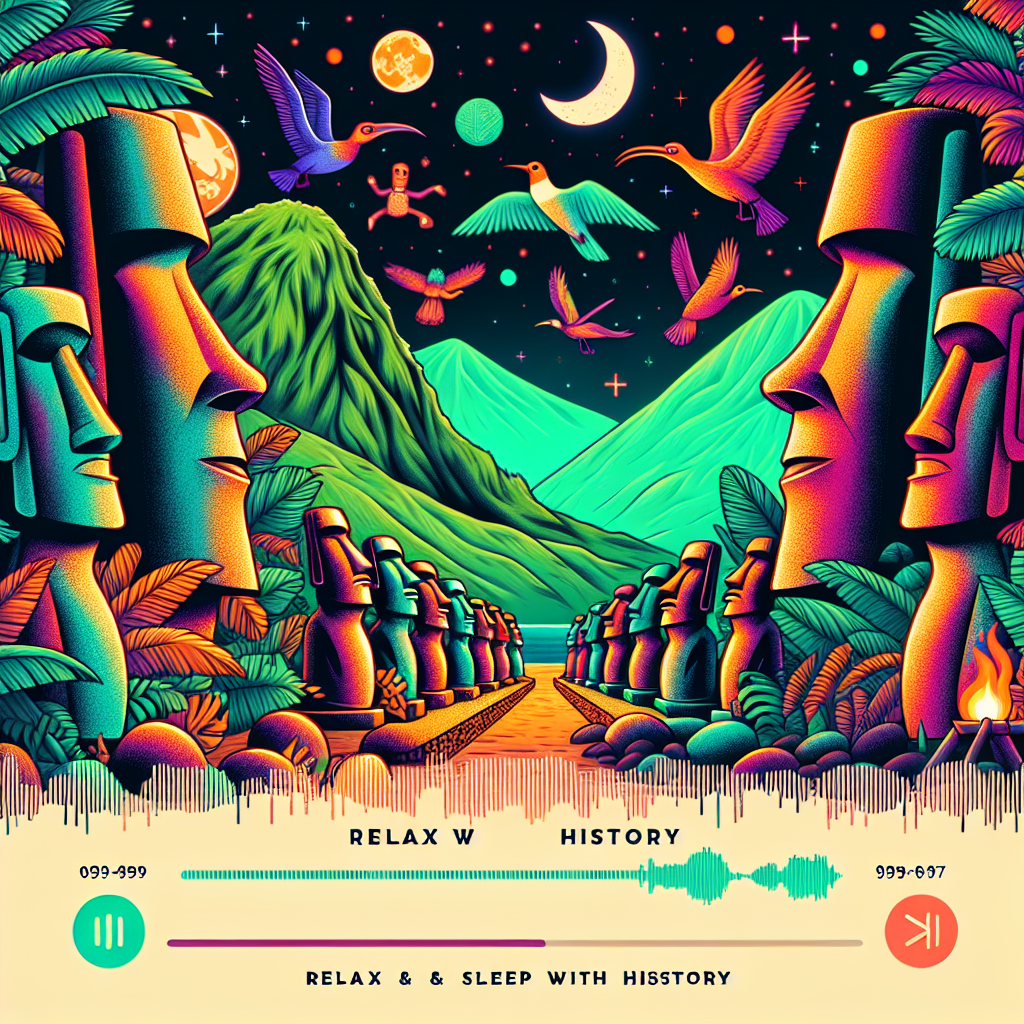
Easter Island: The Strange Statues & Birdman Cults of Rapa Nui | Relax & Sleep with History
In this episode of 'Relax & Sleep with History,' host Harris delves into the intriguing history of Easter Island, also known as Rapa Nui. Explore the mysteries surrounding its iconic Moa...
Easter Island: The Strange Statues & Birdman Cults of Rapa Nui | Relax & Sleep with History
Culture •
0:00 / 0:00
Interactive Transcript
spk_0
Welcome to Calm History.
spk_0
I'm Harris and this podcast is my quirky mix of education with sedation.
spk_0
So go ahead, lean back, put up your feet, and settle into my time machine of tranquility.
spk_0
I hope this episode distracts and relaxes your overactive brain squirrels.
spk_0
I have a big announcement.
spk_0
For the first time ever, I'm giving away a free one year silk plus membership to a lucky silk
spk_0
plus member. I recently announced this to my current silk plus members and only five members
spk_0
had entered the giveaway after the first week, which means your chances of winning are ding-dang
spk_0
dig-a-de-good. If you want to enter, tap the link in the episode notes, then become a silk plus
spk_0
member today. The first seven days are totally free and you'll get immediate access to more than
spk_0
600 full length episodes of calm history, sleep whispers, and my other relaxing podcasts,
spk_0
as well as you'll be able to read all about the giveaway and decide if you also want to enter,
spk_0
which you can do anytime before November 20th, 2025.
spk_0
Okay, enough of me flapping about those flapjacks on with the episode.
spk_0
Today's episode is about Easter Island, also known as Rapa Nui. You may know this island better
spk_0
as that one with those huge stone statues. The island has a very interesting history
spk_0
and it's often used as an example of a thriving civilization that collapsed for unclear reasons.
spk_0
I will cover several of these theories about why it collapsed and I'll also tackle these questions.
spk_0
Why is it called Easter Island and what does Rapa Nui mean? How many huge statues are on the island?
spk_0
Why were those statues even created? How were those statues created and transported?
spk_0
Why are many of the statues now lying face down? What animal contributed to the extinction of
spk_0
multiple plant species? What other factors contributed to the extinction of trees and birds on Easter
spk_0
Island? What happened to the large population of native people on the island?
spk_0
And I'll finish with the slight recovery of the island in modern times.
spk_0
Okay, time to begin today's historical tale. Easter Island, also known as Rapa Nui,
spk_0
is a Chilean island in the southeastern Pacific Ocean. It is famous for its huge
spk_0
887 statues called Moai created by the early Rapa Nui people.
spk_0
Polynesian people most likely settled on Easter Island sometime between 700 and 1100
spk_0
AD or CE. It is likely that they created a thriving and industrious culture as evidenced by those
spk_0
huge statues as well as other artifacts. But over time some mysterious events and some
spk_0
forestation of the island and other devastating effects of the culture and people of Rapa Nui.
spk_0
At its peak there were probably about 15,000 people living on Easter Island.
spk_0
And then another low point there were only 111 people on the island.
spk_0
The rest of this episode will explore some more details about the island, the history of the island,
spk_0
and all these strange events that occurred on the island that led to the rise, the fall,
spk_0
and now the recovery of Easter Island.
spk_0
I'll begin with some interesting facts and historical details.
spk_0
Easter Island is a relatively small triangle shaped island. It is about 15 miles or 24 kilometers long
spk_0
and about 8 miles or 12 kilometers wide. It is also one of the most remote inhabited islands in the
spk_0
world. The nearest inhabited island is Pitcairn Island, which is about 1,300 miles or 2,000 kilometers
spk_0
away. The nearest continental land is in Central Chile, which is about 2,200 miles or 3,500 kilometers
spk_0
away. Currently, Easter Island is a special territory of Chile that was annexed in 1888.
spk_0
According to the 2012 Chilean census, the island now has about 5,800 residents of whom some 60%
spk_0
are descendants of the Aboriginal Repanui. The name Easter Island was given by the islands
spk_0
first recorded European visitor, the Duchess explorer Jacob Rogovine.
spk_0
He named the island this because he first encountered it on Easter Sunday in 1722,
spk_0
while searching for a different island. The current Polynesian name of the island,
spk_0
Repanui, was coined after the slave raids of the early 1860s.
spk_0
The name Repanui means big Rapa, and this name refers to the island's topographic resemblance
spk_0
to another island called Rapa. Now you may be thinking what I'm thinking.
spk_0
If Rapa Nui was a new island, named after a prior island called Rapa, it seems that Rapa Nui
spk_0
probably translates into Rapa Nui or New Rapa. I looked into this but couldn't find any support.
spk_0
I guess it's just accidental phonetic coincidence that the word Newy sounds like the English word
spk_0
New when it actually means big. Oh well. All right, back to the early history of Rapa Nui.
spk_0
Estimated dates of initial settlement of Easter Island have ranged from 300 to 1200 AD
spk_0
or CE, approximately coinciding with the arrival of the first settlers in Hawaii.
spk_0
However, radio carbon dating analysis has changed this estimate slightly.
spk_0
Rapa Nui is now considered to have been settled in the narrower range of 700 to 1,100 CE.
spk_0
ongoing archaeological studies even suggest a later date of maybe 1200 CE.
spk_0
According to oral tradition, the first settlement on Rapa Nui was at the coastal area of Anakina.
spk_0
Researchers have noted that this coastal area provides the island's best shelter from prevailing swells,
spk_0
making it easier to land and launch canoes from here.
spk_0
However, radio carbon dating at other sites suggest other areas of Rapa Nui were settled before
spk_0
Anakina was. The island was most likely populated by Polynesians who navigated in canoes or Catamaranse
spk_0
from the Gambier Islands or the Marquesis Islands. Either way, their trip would have been about
spk_0
a few thousand kilometers or a couple of thousand miles of those two options. A stronger argument
spk_0
can be made for the Gambier Islands just because those islands are closer to Easter Island.
spk_0
Additionally, the language of Rapa Nui is 80% similar to the language spoken on the Gambier Islands.
spk_0
In 1999, a voyage with reconstructed Polynesian boats was able to reach Easter Island from the Gambier
spk_0
Islands in 19 days. When James Cook visited Easter Island, one of his crew members, a Polynesian
spk_0
from Bora Bora, was able to communicate with the Rapa Nui. This suggested an early connection
spk_0
between Easter Island and Bora Bora. It is also possible that early Polynesian settlers arrived from
spk_0
South America due to their remarkable scene navigational abilities. This is also supported
spk_0
through the agricultural evidence of the Sweet Potato. The Sweet Potato was a favorite crop
spk_0
found among Polynesian society for generations. But the origins of the Sweet Potato
spk_0
traced back to South America, proving evidence of interaction at some point in time between South
spk_0
America and Easter Island. According to oral traditions, recorded by missionaries in the 1860s,
spk_0
the island originally had a strong class system. This class system included a high chief,
spk_0
willing great power, over nine other clans, and their respective chiefs.
spk_0
Now, why did the islanders build those large statues? The most visible element in the culture
spk_0
was the production of massive statues called Moai. Although often identified as Easter Island heads,
spk_0
the statues have torsos, with most of them ending at the top of the size.
spk_0
A small number are complete figures that kneel on bent knees with their hands over their stomachs,
spk_0
some statues may appear as being just a large head. But this is because they have become buried
spk_0
up to their necks by shifting soils. Some believe that these large statues represented
spk_0
deified ancestors, with each statue representing the deceased head of a lineage.
spk_0
According to National Geographic, quote, most scholars suspect that the Moai were created to
spk_0
honor ancestors, chiefs, or other important personages. However, no written and little oral history
spk_0
exists on the island, so it's impossible to be certain. End quote,
spk_0
the Rapa Newi people believed that the living had a symbiotic relationship with the dead,
spk_0
in which the dead provided everything that the living needed, such as health, fertility of land and
spk_0
animals, fortune, and other aspects. In return, the living Rapa Newi people through offerings
spk_0
provided the dead with a better place in the spirit world. Most settlements were located on the
spk_0
coast, and most Moai statues were erected along the coastline facing inland. It is believed
spk_0
that they were placed here to watch over their descendants in the settlements before them,
spk_0
with their backs toward the spirit world in the sea.
spk_0
When and how did the islanders build those massive statues? The 887 statues were carved in 1100
spk_0
this 1680 CE has determined by radio-carbon dating. Almost all of them were carved from compressed,
spk_0
easily worked, solidified volcanic ash, found at a single site on the island.
spk_0
The native islanders who carved them used only stone-hand chisels, which lined place
spk_0
all over the quarry. The stone chisels were sharpened by chipping off a new edge when it dulled.
spk_0
While sculpting was going on, the volcanic stone was splashed with water to soften it.
spk_0
While many teams worked on different statues at the same time, a single Moai statue took a
spk_0
team of 5 or 6 men about a year to complete. Of the almost 900 huge statues, 50% never made it out of the quarry.
spk_0
25% were found en route to their intended locations, and only 25% were installed at a final destination.
spk_0
The largest statue weighs 82 tons and is about 10 meters or 32 feet tall.
spk_0
The statues were possibly moved by the use of a wide-shaped sledge with cross pieces.
spk_0
The sledge was pulled with ropes made from the tough bark of a native tree and tied around the
spk_0
statue's neck anywhere from 182 to 250 men, properly pulled a sledge depending upon the size of the
spk_0
statue. Time for a quick break. Did you know that if a podcast isn't growing, it's dying?
spk_0
So while you're listening right now, could you send one person an email or a text and tell them about this
spk_0
podcast? Thank you. You just helped to keep this podcast alive. Also, to enjoy all 100 plus episodes of
spk_0
Mom History, but without any breaks like this one, then just tap the link in the episode notes
spk_0
and become a Silk Plus member. It's free for a limited time.
spk_0
Alright, back to the episode. Another method that might have been used to transport the Moai
spk_0
would be to attach ropes to an upright statue and rocket, tugging it forward as it rocked.
spk_0
This might have been managed by as few as 15 people. This would fit the legend of the Moai statues
spk_0
walking to their final locations. At least four pieces of evidence support the transport of upright
spk_0
statues. Number one, some statues in transit were documented standing upright along the old roads.
spk_0
For example, a party from Captain Cook's voyage reported that they rested in the shade of a
spk_0
standing statue. This would be consistent with upright transport. Number two, the abandoned and
spk_0
falling statues near the old roads are most often found, face down on downhill routes,
spk_0
and face up on their backs on uphill routes. This supports the transport of upright statues
spk_0
that were being transported with their faces forward as if they were walking forward.
spk_0
Number three, studies have shown fractures along the bases of the statues in transport.
spk_0
These could have arisen from rocking the statue back and forth and placing great pressures
spk_0
on the edges. And finally, number four, the statues found along the transport roads have wider
spk_0
bases than the installed statues. This would facilitate more stable transport. Also, stone chips
spk_0
around the installed statues also indicate that the wider base was removed during installation.
spk_0
What are the potential reasons for the collapse of the Rapa Nui civilization?
spk_0
Jared Diamond, the historian, suggested that cannibalism took place on Easter Island
spk_0
after the construction of the Mowai. This was because the building of the Mowai
spk_0
may have required the use of many trees. If the Mowai were transported by rolling them
spk_0
on trees to get them to their final destinations, the use of these many trees
spk_0
then could have led to major deforestation. The deforestation then further destabilized and
spk_0
already precarious ecosystem and further compromised food sources. Initially, the island was home
spk_0
to many species of landbirds and trees, including at least three species of trees which grew taller
spk_0
than 15 meters or 49 feet. One species of tree in particular was possibly the largest palm trees
spk_0
in the world at that time. A major factor that contributed to the extinction of multiple
spk_0
plant species was the introduction of the Polynesian Rat. Studies by paleo botanists have shown rats
spk_0
can dramatically affect the reproduction of vegetation in an ecosystem. In the case of Rapa Nui,
spk_0
recovered plant shell seeds showed markings of being nought on by the rats. One scientist wrote,
spk_0
quote, sometime before the arrival of Europeans on Easter Island, the Rapa Nui experienced a
spk_0
tremendous upheaval in their social system brought about by a change in their island's ecology.
spk_0
By the time of European arrival in 1722, the island's population had dropped to 2000 to 3000
spk_0
from a high of approximately 15,000 just a century earlier. End quote.
spk_0
Around that same time of 1722, 21 species of trees and all species of landbirds became extinct.
spk_0
This occurred through some combination of overharvesting, overhunting, rat predation,
spk_0
and climate change. The island was largely deforested and it didn't have any trees
spk_0
more than three meters or 10 feet tall. Loss of large trees meant that residents were no longer
spk_0
able to build sea worthy vessels which significantly diminished their fishing abilities.
spk_0
One theory regarding the deforestation that caused such ecological and social damage
spk_0
was that the trees were used to build the statues. The cut trees were used as rollers to move the
spk_0
statues to their final location from a quarry on the island. Deforestation also affected
spk_0
agricultural production on Rapa Nui. Initially, the native tropical forests provided
spk_0
ideal shade cover for soil, but with the native forest being destroyed, the top soil became eroded,
spk_0
causing a sharp decline in agricultural production. This was further exacerbated
spk_0
by the loss of landbirds and the collapse in seabird populations as a potential source of food.
spk_0
By the 1700s, residents of the island were largely sustained by farming with domestic chickens as
spk_0
the primary source of protein. As the island became overpopulated and resources diminished,
spk_0
warriors, known as Matatoua, gained more power. These warriors shifted the emphasis away
spk_0
from our religious type worship of ancestors and the Moais statues and shifted it more towards a
spk_0
cult with increased warfare. This apparently began around the year 1540.
spk_0
This new cult maintained that the living could no longer contact dead ancestors through
spk_0
the Moais statues, but rather through living human beings chosen by a competition. A living
spk_0
Rapa Nui warrior who could contact these ancestors was called a Bird Man.
spk_0
In this new group of warriors are referred to as the Bird Man Cult.
spk_0
The competitions for becoming a Bird Man started around 1760 after the arrival of the first Europeans.
spk_0
The Bird Man competitions ended in 1878 due to the construction of the first church
spk_0
by Roman Catholic missionaries who had arrived 14 years earlier. In Gravings on Rocks,
spk_0
representing Bird Men on Easter Island are exactly the same as some in Hawaii.
spk_0
This indicated that the Bird Man concept was probably brought by the original settlers.
spk_0
However, the competition for becoming a Bird Man was unique to Easter Island.
spk_0
The goal of the Bird Man contest was to obtain the first egg of the season from a specific offshore
spk_0
island. Contestants descended sheer cliffs and swam to the nearby island where they awaited the
spk_0
arrival of the birds. Once a contestant had an egg, he would swim back to Rapa Nui and present it
spk_0
to a sponsor. This resulted in him having the title and power of Bird Man for that year.
spk_0
What happened to the island once Europeans started to visit?
spk_0
A 1994 study asserted that there is little archaeological evidence that the Rapa Nui Society
spk_0
started to collapse before the arrival of Europeans.
spk_0
Bohn pathology of Islanders from the pre-European period clearly suggest few fatalities can
spk_0
be attributed directly to the islands. The first recorded European contact with the island was on
spk_0
Easter Sunday in 1722 when the Dutch navigator Jacob Rogovine visited the island.
spk_0
He stayed on the island for a week and estimated the population at 2000 to 3000 inhabitants.
spk_0
The number may have been greater because some natives may have been frightened into hiding.
spk_0
They were hiding because of an initial misunderstanding that led Rogovine's men to fire on the natives.
spk_0
Killing more than a dozen and wounding several more.
spk_0
The next foreign visitors were two Spanish ships in 1770.
spk_0
The Spanish reported the island is largely uncultivated with a seashore lined with standing stone statues.
spk_0
Four years later, in 1774, British explorer James Cook visited Easter Island.
spk_0
Cook reported that some statues were lying face down, having been toppled in war.
spk_0
The British ship HMS Blossom arrived in 1825 and reported seeing no standing statues.
spk_0
According to some historians, the statue toppling continued into the 1830s as a part of fierce
spk_0
internal wars. By 1838, the only standing statues were on several specific slopes of the island.
spk_0
Easter Island was approached by visitors many times in the mid-1800s, but by then,
spk_0
the islanders had become openly hostile to any attempt to land.
spk_0
As a result of this isolation, very little new information was reported before the 1860s.
spk_0
In December 1862, Peruvian slave raiders struck.
spk_0
The island's abductions continued for several months, eventually capturing around 1,500 men and women.
spk_0
This was half of the island's population.
spk_0
Among those captured were the island's top chief, his heir, and those who knew how to read and write,
spk_0
a specific pollination script. The slave raiders were later forced to repatriate the people they
spk_0
had kidnapped, but this created a new problem on Easter Island. Carriers of smallpox disembarked onto
spk_0
the island with some of the surviving natives creating devastating epidemics. Easter Island's population
spk_0
was reduced so severely that some of the dead weren't even buried.
spk_0
Many natives also died of tuberculosis which had been introduced by visiting whalers.
spk_0
In 1867, the first Christian missionary to the island died of tuberculosis and about 25%
spk_0
of the natives also succumbed about that same year. In the following years, missionaries and other
spk_0
between natives and settlers. One particular settler bought up all of the island except for the
spk_0
missionaries area and moved a few hundred natives to Tahiti to work for his backers.
spk_0
In 1871, the missionaries evacuated all but 171 natives to the Gambier Islands.
spk_0
Those natives who remained were mostly older men. Six years later, in 1877,
spk_0
only 111 people lived on Easter Island and only 36 of them had any offspring.
spk_0
With over 97% of the population dead or gone in less than a decade, much of the island's cultural
spk_0
knowledge had been lost. Did the island ever recover? Yes. Starting in 1878, the island's population
spk_0
slowly recovered. One particular merchant, Alexander Sam and Junior, worked to repatriate
spk_0
Rapa Nui native workers from his inherited plantation on Tahiti. He also introduced the coconut
spk_0
to Easter Island, one of the first sizable trees on the island since its deforestation two centuries
spk_0
earlier. He eventually bought up all lands on the island with the exception of the missionaries lands.
spk_0
Alexander Sam and became the island's sole employer and worked to develop tourism.
spk_0
In 1888, he sold his interests in Easter Island to the government of Chile,
spk_0
making Easter Island a territory of Chile. Chile purchased all the remaining lands that had been
spk_0
purchased from the descendants of natives who died during the epidemics. After Chile annexed
spk_0
Easter Island, the surviving natives were confined to a specific part of Easter Island and the rest
spk_0
was rented as a sheep farm. In 1953, the island was managed by the Chilean Navy for about 13
spk_0
years. And then finally, in 1966, the entire island was reopened and all the Rapa Nui natives
spk_0
were granted Chilean citizenship. This is the end of the episode. To enjoy all 100 plus episodes
spk_0
of calm history and without any ads, promos or breaks, then just become a silk plus member.
spk_0
It's free for limited time. If interested, then tap the link in the episode notes or go to
spk_0
comhistory.com