Culture
524 - How to Know Whether to Push On or Give Up
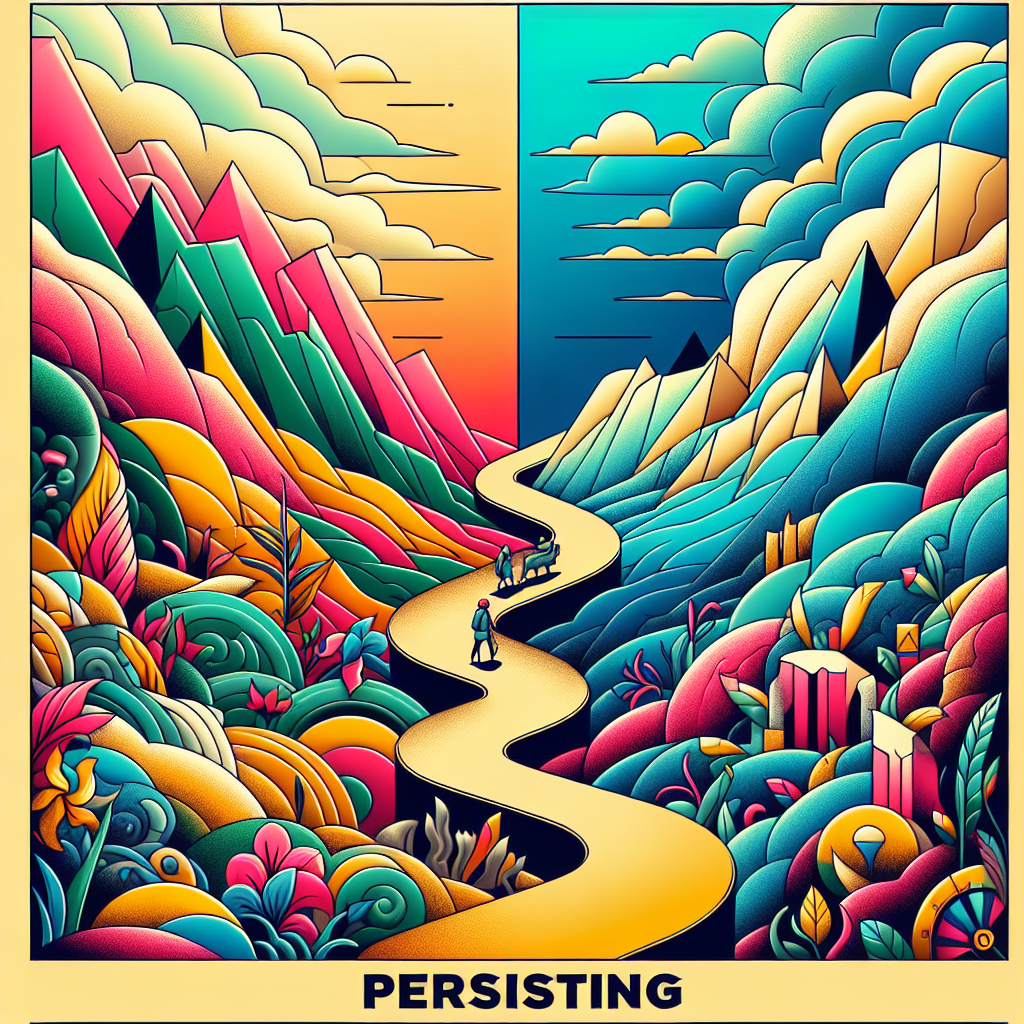
In episode 524, we explore the challenging moments in the creative journey and how to discern whether to push through or let go. By understanding the nature of creative resistance and the concept of e...
524 - How to Know Whether to Push On or Give Up
Culture •
0:00 / 0:00
Interactive Transcript
Speaker A
On the creative journey, it's easy to get lost, but don't worry, you'll lift off. Sometimes you just need a creative pep talk. How do you know if you should push on or give up? We start every episode talking about the creative journey. But if I'm honest, it doesn't always feel like a journey. It often feels like a series of setbacks and dead ends and obstacles and just difficulty, right? Like, it can just be exhausting. And it's not just one stage of the journey. It can happen before it starts. You're stuck in pitch land, trying to break in, trying to get someone to listen to you, listen to your, your demo, read your treatment, whatever it is like that can feel incredibly difficult and just so wrong. Pitching yourself, selling yourself in that way. It can happen in the middle of a project where you are way into this thing that you thought was it. You sold the thing, you're making it, you're loving it until you're hating it and you're like, this is. This cannot be right. What did I do? How did I end up here? How did I think this was the way to go? It can happen at the end where you're trying. You've already made it in the it's coming out and now you're marketing it, selling it, telling people about it. But the more you talk about it, the more you're like, is this terrible? I don't like, what am I doing? It can feel so wrong sometimes. And I know because I once worked on a project for years and years and just kept trying it, pitched it and made more stuff, worked so hard on it, felt like this. I, for the longest time like, this is it. And then got so frustrated that I just gave up and just posted it on Twitter and was like, that's it. But that also became my best selling book later on. And so I know that the journey is full of these stops. Starts, feel so right, feel so wrong. And in this episode, I want to talk about if you're feeling like, oh, this just. It feels so wrong right now, I want to help you to figure out whether you need to push on or you need to give up. And we're going to start by talking about a common misconception about this wrong feeling. And then we're going to move into some of the science of how to transform, almost magically transform, this stress. And we're going to end with an open signs checklist that's going to help you identify whether you should keep going or call it a day. Let's go. This Episode is sponsored by Squarespace. I love Squarespace. I'm a long time user. One of the things I love about Squarespace is I will use. It's so easy to use that I will use it to create pitches. If I'm pitching a book or I'm pitching square something to a client, I will use a Squarespace page in my website and I'll build the whole thing there. Then you don't have these clunky like document PDFs clogging up people's inboxes and it looks super slick. If you want to see one of those that I use all the time, I did one for my series right side out. Andyjpizza.com RSO and you can see how I create a little pitch summary of that project. Go to squarespace.com pep talk get building for free and trying it out and testing it. And then when you're ready to launch, use promo code pep talk all one word for 10% off your first purchase. Thanks, Squarespace. I'm Jonathan Goldstein, and on the new season of Heavyweight. I help a centenarian mend a broken heart. How can 101-year-old woman fall in love with again? And I help a man atone for an armed robbery he committed at 14 years old. And so I pointed the gun at him and said, this isn't a joke. And he got down. And I remember feeling kind of a surge of like, okay, this is power. Plus, my old friend Gregor and his brother try to solve my problems through hypnotism. We could give you a whole brand new thing where you're like super charming all the time. Being more able to look people in the eye, not always hide behind a microphone. Listen to Heavyweight wherever you get your podcasts. If I had a nickel for every time I got super excited about a new creative path. And I was so stoked and I was like, oh my gosh, this is all makes sense now. And I went really hard and then hit a wall and just bailed on the whole thing. I would have so many nickels. I would have like a huge freaking pile of nickels. Like such a huge pile. I could build something out of it, like a sculpture, like a public art piece made out of nickel, which actually isn't that bad of an idea. I feel like there's a lot of money in that world, a lot of opportunity in the public art space. And, you know, now I think about it like my best friend as a kid, his name was Nickel is. It's like maybe kind of just meant to be hold on. I. I'll be right back. If I get back to podcasting, I don't know. I've got a whole new thing going on. I just gotta check out the. The Ohio grant situation for these kind of public art things. Oh, they're not. They're not even open. The grants don't even open. Applications aren't even taken for another month. Probably don't even want to make a sculpture next month, so. Sound familiar? I don't know. I can't speak for you, but I have this weird thing. No matter how hard I try it, it just is part of me where I feel like if this is the right way, it should just flow, baby. It should just be easy. It should just. Like, I step that direction. Just the world opens up, and I have this feeling like if the sculpture thing is right, the grants would be open right now. If this path was right, that one cold email would be met with just a huge, unexpected opportunity. If this was the right type of art to make, it would just go viral. It would just take off. If this was right, I wouldn't have to pound the pavement and spread the word on my own. People would just pass it along and word of mouth would make it work. If this was right, it wouldn't feel so wrong. It wouldn't feel so difficult. I wouldn't have to push like this. It just feels wrong. When I hit friction in my path, my nature is to feel like this is wrong. It. It's like, if this is the right door, it should just fly open. It's literally like trying a door, and you go to push it open and it doesn't budge. You're gonna be like, oh, that doesn't feel right. Like that. That. I'm not trying to break anything. I'm not gonna break into this place. Like, it's clearly not the right time. Like, is this place even open? Maybe later. A friend is like, hey, did you try that place? And you're like, no, I. I tried, but when I went, it was closed. Like, the door wouldn't even budge. And your friend's like, dude, no, that door is just really difficult to open. It just. It's the kind that gets stuck. Like, you've got to push through. It's going to feel wrong. It's going to feel wrong. It's just that kind of door. And you know this. There are doors like that where the key to opening them isn't a key. It's not locked. The key is knowing that this is a difficult door to open. You've got to push so hard that it's going to feel wrong, that it's going to feel like this door doesn't open. That's the way you open some doors. And you've all. We've all had experiences with doors like that. And guess what? The door to the art world is one of them. Doors. You gotta push so hard, it's gonna feel like you're breaking in. And guess what? That's why they call it that. You never hear a musician be like, I'm trying to find. I'm trying to gently nudge my way in. No, they say I'm trying to break in to the music industry. You don't hear an author being like, yeah, I'm trying to, you know, do my little tap, tap, tap on the. With the little door knock, door knocker thing. They're like, no, I'm trying to break in. I'm trying to find my big break. You've heard filmmakers say, you've heard illustrators say that this is the name of the game. Why? Because the doorway to the creative worlds, they get stuck. When you push, it's going to feel wrong. It's. But that's the. That's the key to knowing, is that. That pushing, that difficulty. The way to get through it is knowing that that's how it should feel. And this is the brilliance of the book the War of Art by Steven Pressfield, which, every time I go to say it, I have to think in my head, is it Art of War or War of Art? Which one is it? And that's why I had to say that so slowly. But that's the brilliance of this book. If you could boil it down to one thing, it's this idea he calls the Resistance. And he created this space to say, hey, I've made movies, I've written books, I've been through this process. And one thing nobody tells you is there are times where it's going to feel wrong. It's going to feel stuck. It's going to feel like you are pushing and pushing and pushing to the point of breaking. And that there. That. That is okay. And just like when you're moving in a door that someone told you, like, that one gets stuck, you're going to feel comfortable pushing through it. And that information is what allows you to do it. Like, 90% of this show is that is saying that there is a challenge to making creative work that isn't just like, you know, sorry, it's part of the process. It's a key part of it being enjoyable. You know, I'M really into positive psychology research. Things like Flow. That was pioneered by this guy, Mihaly Csikszentmihalyi. He wrote a whole book about it called Flow. And in that he talks about how the key to finding that flow, that we think of as ease, that we think of as like, channeling creativity. The key, he said, is 70% mastery. 70%, just like you got this, but then 30% challenge. 30%, this is hard. 30%, maybe even this feels wrong or difficult. This feels stuck. That challenge and resistance and friction is part of the process. You know, I think it was the last episode I was talking about the game Elden Ring. I'm a huge Elden Ring fan. I think I put 260 hours on that Bad Baby still going. Because I'm trying to beat the final boss in the the dlc and it just feels impossible. But that game is incredibly difficult to play. It's really notorious. All the games that the people that make that they're called from software, all the games they make are really difficult. They're notorious for that. They're famous for that. To the point where when I went to play Elden Ring, I was doing so with the knowledge that this is supposed to be difficult. Every person that had told me about it, I had a handful of people that knew my gaming history and, and my taste in games. They were like, you should play Elden Ring. You're going to freaking love this game. But you should be warned, it's super hard. And that's kind of the fun of it. And this has been such a massive shift in my creative practice because it's the same. And if I had started Elden Ring not knowing that it was supposed to be really hard, that it was supposed to feel wrong, I would have given up. Because when you start, the first thing you do is just get demolished by this huge boss. Then you walk out. You kind of get past that one walk out, there's another boss that just destroys you. And you've got to kind of like, sneak your way through the land and grind to get decent enough to get past some of these things. And some of them, a lot of people just like, don't even face a lot of these bosses because it's just so difficult. They just figure out a way around it. And if I hadn't been told that, if I didn't know that, if I didn't know that was a part of the fun of the game, I would have just given up. I'd be like, I'm just not good enough for this thing. And the same was true in my creative practice. For the longest time, I thought, man, every single thing I'm doing, you know, I try to do editorial illustration, I try to do advertising stuff, I tried to do picture books. I got, you know, I was trying to break into podcasts. I've all these different things. Early on, as I was trying to break in, it just felt like, man, everything just feels like a battle. Everything just feels like a fight. But as I got familiar with people that had gone through it before, I realized that's part of it. This isn't a battle. Creativity is like wrestling, where the difficulty is part of the fun. The challenge, the puzzle is part of being creative. And now when I go work on an illustration and I'm coming up with concepts or when I'm coming up with metaphors or analogies or stories for this podcast or for picture books, and I'm in that difficult phase where I'm like, I'm really like trying to work through it and it's starting to feel difficult and challenging. I think I'm a wrestler. I'm a creative wrestler. This is what is fun. And actually this is why when it works, there's so much joy. It's so fun. It's the contrast of this wrestling. And so I'm not in a battle, I haven't been attacked. I'm a wrestler. And that shift just makes all the difference. It's supposed to be hard. It's part of the fun that is a massive game changer in your creative journey. But it's not just from my experience. This is actually something that scientists have studied. And this blew my frickin mind. I've mentioned a couple times on this show, but I don't think I've ever fully, you know, dedicated a whole episode on it like this. But I, I thought it's really so essential that we need to dive in a little bit deeper. We need to just go in with a microscope here and really look into it. So buckle up. This is a doozy. This is to me one of the most interesting things I've ever read. And I'm. And I really do, I really do mean that. And there are tons of articles about that about this studies. And here's the idea. It's about eustress versus distress. There is. This is an article on Psychology Today. You stress the good stress, leverage the right kind of stress to boost performance and enhance growth. I'll put some of these in the show notes. But here's the, here's the idea that eustress is the good stress. It's good for us mentally, it's good for us physically. It does good things to our body and minds. We need this type of stress in our life. Distress is the opposite. It is the kind that has a negative impact on our well being, both mentally and physically. Okay, you, you have felt this before. You've been in a game where it's challenging and it's difficult, but it's also why it's fun to play that game. And then you've been in scenarios, maybe a class or a job or a family situation where you are under so much stress and it's distress and it's causing you so much harm. Here's the wild thing that I just can barely comprehend the difference between eustress good stress and distress bad stress. A huge determining factor on which stress is going to manifest in your mind and body is how you think and feel about the obstacle. If you feel like this is the kind of difficulty that I should expect, this is the way it should be that I know this feels a bit wrong because it's friction, but I know this is part of the game. I know this is part of what I want to do. I know that this is the right type of challenge. If you feel like that about the obstacle in front of you, it's. It is going to manifest in your body as you stress as good stress. But if you feel like this is wrong, this is in the way this shouldn't be like this, it shouldn't be this hard. It's going to manifest in your body as distress that the way that you perceive the difficulty is going to make all the difference. And it's why we have dedicated the lion's share of this podcast to that idea that creativity is a journey. It's an adventure. And for it to be an adventure, there has to be risk, there has to be challenge, there has to be difficulty that you know when you're moving through that door that there should be some friction. And that's why that picture, that metaphor is really useful to me because I can imagine trying to open a door and thinking, oh, someone told me it was supposed to be like this. Instead of feeling the stress of oh, the physical stress of this is kind of hard to do and the mental stress of and I don't know if this is right and I might be breaking it and I might be getting in trouble because I'm like breaking into this thing. I only have one stress, which is this, the physical push, just the challenge of doing the work because I know, yeah, this is the way that it should feel. And it changes the stress of the creative journey from bad stress to good stress. This is huge. And I think it. There's so many implications. So interesting, too, that I've had this experience. I'm reading it in this literature, and this is, like, textbook freaking spirituality and traditional wisdom from throughout the ages of that the worst suffering you're going to have is the resistance to the suffering. And it's not just an idea. It's actually cataloged in these studies. And so what do you need to push through? You need people like me and people like the people that have done the kinds of things that you've done. You need to hear their experiences. You need to find the people that are willing to be vulnerable and say, yeah, this part, that door, that's fricking tough to push, because it will give you what you need to know that that wrongness of difficulty is actually right, how it feels sometimes. Okay, it's time for the Call to Adventure. Every episode. We don't want to just pep you up and leave you, like, all right, have fun feeling jazzed. We want to give you something that lets you put this to work and make a difference in your creative practice. So this week, the cta, the Call to Adventure, is Open Signs Checklist. I'll tell you what that's all about. So a few weeks ago, me and my family went to this curry shop that we go to pretty frequently. It's our favorite curry in the city. And we get out of the car, and we're watching this woman in front of us go to get in before us. And she tries the door, and she doesn't go in, and she's, like, looking around, and we're like, oh, no, no, we're not. We all got our heart set on this curry. And this place is closed for some reason. And we're like, whoa, hey, is it closed? And she's like, yeah, I don't know. Like, the sign looks open. I don't know what's going on. And we're looking around. We check the hours, we check the open sign, we look inside, and we're like, hey, there are people definitely eating in there. Like, what is going on? And so I think, you know, I'm gonna just try the door, and I push it, and I go right in. And maybe there was a little bit more resistance than normal, but I didn't even notice it or realize it because I'd been through that door a million times. It was just second nature to me at this Point. And that is pretty much maybe an overstatement for my creative practice because I still get pretty whiny about difficult stuff. But I have become much more tolerant because I've broke into the editorial illustration industry, the advertising side of illustration, the publishing world, podcasting, public speaking, all these different places. Like, breaking in is one of the things that I do. Being an ADHD person that gets bored easily and wants to try a bunch of different things and have a really diverse group of things that I do. So I have become accustomed to going through those sticky doors. Right. And so what I suggest you do, if you find yourself in a place where it's difficult, you want to bail, Maybe you think you want to do something, but you're like, I think it's going to be too hard, or maybe you just bailed on something, but you might still be able to salvage it. Look, there are times where you are going the wrong way there. There are times where industry doors shut for good, where things change, and there really is. That restaurant really is gone. Right? There are times when that happens. But I don't know about you, I am too quick to jump to that conclusion. When it gets difficult, when that door won't budge, you know, there I can look back through all of these different times. The most important creative projects I've ever done, you know, the kids book I did that became a bestseller, or the this podcast, or even college. There were moments where I thought, this doesn't feel right. This feels so difficult. It must be wrong. But I've gone through those doors enough to know, like, no, that's part of the process most of the time. And almost always I'm glad if I just finished the race, regardless. You know, the last. Right before the last year of college, I was having this serious chat with my dad and I was like, I think I'm going to drop out. Like, I just don't really know if this is what I want to do. It just feels like I have these other things that maybe I want to explore. And he was like, look, you've got one year left. Just do it. Just finish it. Then you have a degree, and when you have a degree, it'll open all kinds of different doors. It's just worth finishing strong at this point. You've already gone this far. Even if it's not right, it's just, you've finished it, you've got it, and then you can really make a good decision. And guess what? A couple months later, that's when I met Sophie. I wouldn't even have Lived in England. If that hadn't been true, if I hadn't stuck with it. And it ended up that last year ended up being the year that I did the work that turned into my first little published book. And all kinds of things happened in that year. And I was so sure that it was wrong because it just felt tough. And so, like I said, there are exceptions to this. There are times when the door really is locked, the place really is closed, and the business really is gone. That's all true. But how do you know if it's the exception? That's what the Open Signs checklist is all about. These are the three things you can run through that we did at the curry shop. We looked for the Open sign. We looked for if there's people in there. We looked at the hours, and these are things you can do for your own creative practice. So first thing you got to do is check with people that have already been there. Me, that woman told me I'd been there a bunch of times. I knew what the door felt like to move through. And so one of the things you can do is you can reach out to people on that have gone through this door plenty of times. People that are established in that world and ask them, like, is it supposed to be this difficult? Have you ever felt like this? This. Don't send an email to the most famous version of this person. Send an email to someone who is just a regular in that place and say, hey, is this supposed to be this tough? Is this supposed to feel like this? Or am I making this harder than it needs to be? Are there ways where I could make this easier? Check with people that have been through those doors. That's the first check on the checklist. The second one is check the hours. Check the hours of the establishment. Is it even open during this time? This is about timing, you know, this is about, is this the right thing for you to be doing in this season of your creative practice? For me, I kind of feel like my. Everyone has a different rhythm. Like, if you're a musician, you might have, like, a cycle that's three years long where you have the writing and the recording and the touring, and there's all these different ways that that plays out. If you're an author, it might be similar. Filmmaker might be similar. If you're an illustrator, it might be way shorter. Your seasons might be weeks. For me, they kind of match a little bit with the seasons of a year. And I've mentioned this a bunch on the show, so I won't go super deep into it. But for me, I feel like summer and winter, those are the times to catch up on things and kind of feel out what is the next project I want to really double down on. And then by the time fall comes around, that's a big project. I need to know what I'm doing in fall. And then by the time the spring comes around, I need to know, like, what am I doing? That's a season for me doing that difficult work. And for me, it's really helpful to have that because I know, like, when I'm in the middle of a book project that's challenging, I'm like, yeah, that's what I should be doing. It should feel like this right now. Or if I'm in the summer and I'm thinking, wait, why am I not doing anything challenging? I can think, no, that's. That's exactly what I'm supposed to be doing right now. And it allows me to make that into eustress. It makes me able to embrace the challenge of, you know, feeling like I'm not trying hard enough or the challenge of, oh, this is really hard. Having that timing. Checking with the timing has really helped me. But another thing of checking with the timing is also like the flow cycle. So I was talking earlier about how challenge is a big part of it. It's 30% of being in creative flow. But that the time where you have really gotten into this zone where you're in the mastery, you're in the flow, that's really the ideal center part of a creative journey. So whether it was my editorial or my advertising or picture books or whatever it is, whenever you start, that's going to be out of whack. It's like learning guitar. You're not going to get into flow. It's not going to. You're not going to have a 30% challenge. You're going to have 100% challenge or 90% challenge, hopefully. You know, I'm watching my son do guitar lessons and I'm like, this is so much more natural for him. Like, when I tried it, I tried for months and I could barely play anything. And he's already really picking up stuff. And I thought, yeah, it's probably natural to be like not 100% challenge at the start of a creative path, but maybe 90% or 80% or I could keep naming numbers, but you're not gonna get that thing where it's 30% from the get go. So you can check the timing of what is my relationship to this? Is this new? If it's new, a higher amount of challenge and not really getting in the flow state yet. That that actually is. That actually makes sense. Or have I been on this path for a long, long time and now it's like 95% mastery, 5% challenge. And the stress is actually, this is too easy. That's a different timing aspect that you can think about. And then the third one is check for people on the inside. Like, I looked around, looked in the window, saw people still eating there. Is the getting still good. That's something you can do. If you're looking at, should I break into this? Is it worth even trying? You can talk to people of like, is this industry something that's worth. Is. Is this worth the squeeze this juice? That's a thing I've done a few different times. Like, if I've thought about I might make a class, I might go try to make a picture book. I might and at least understand, like, what are the benefits of getting on the inside? Check for the people on the inside. Make sure they're still getting sustenance there. Get an inside scoop. Because if you do, that might give you the motivation you need. They might actually tell you, like, yeah, that door, it's a real difficult one, but it's worth the push. So check on the inside. I got just one more thing. I think it's good to acknowledge that part of the recipe of creative work is the illusion of ease. It is the artist's job to erase the distractions and the seams. And for the audience to be able to take this in effortlessly, enjoyably, it has to feel effortless. It has to feel like a flow. We want to feel like the artist just poured this out. And it reminds me of something. The co author of my book Sunday with Everything on It, Kyle Shealy, mentioned to me once, he said that it's like magicians, that magicians will say, like Penn and Teller will say, usually the magic trick is that you wouldn't believe the lengths that the magicians have gone through to pull this little trick off. That the amount of work and effort and systems and pulleys and trapdoor, like, and just the. The sheer magnitude of effort and difficulty that it takes to pull this off would never cross your mind because it's that ridiculous and that this is kind of true for creativity sometimes. I once had a friend watching me just kind of, you know, sat near me while I was working on illustration and he commented, and he was an illustrator and he commented on like, oh, man, I never knew that you, like, went in there and erase these little bits and, like, created these little textures by hand, like, and really were, like, crafting all the different little elements of that. I never would have guessed that there was all of this effort. I didn't think you would go to that length. And when I was starting out, I think I felt like that I felt like, oh, I should be able to just, like, do a little flick of the hand. And that's, oh, look at how effortless and flowy and nice that looks. But to do that, not only does it take just hours and hours and hours of work, getting to the point where you can have that kind of hand in your work, but also, it might just have been the 80th try of that day. It might have. It might come with this. You don't get to see the behind the scenes. And for you and for the audience to not be thinking about that, to suspend their disbelief, they can't be thinking about, like, oh, man. Wow, that must be. That must have been so much effort. It's just a distraction. And so I think it's just worth knowing that the illusion of ease is a key ingredient to making creative work. And it's. One of the reasons I want to do this show is just to whine on the Internet about how tough it is sometimes to doodle. It's true. All right. I hope you enjoyed this episode. This kind of. In the loose series we're doing world builders, we did one episode, I think it was two episodes ago, that was in this realm. And it was about how your job as a creative is to not adapt to the environment, but adapt the environment to you. And I think it's worth knowing that that effort, moving, terraforming the land that you find yourself in, that is a difficult process. But that difficulty can be part of the fun. It can be part of what makes this great. And we realize this isn't a fight. This is a wrestling match, and you're a creative wrestler. And so much of this show is about trying to encourage creative people not just to fly by the seat of their pants all the time and pants their way and flow their way, ease their way into making creative work, but to embrace the whole brain and see that some of it is like, not just like a Ouija board, but like a puzzle where there's a little bit of strain, a little bit of effort to plot your way a bit. And that might feel a little bit unnatural, it might feel a little bit wrong, but when you push through the other side of that door, it might feel worth it. I think There's a real ebb and flow here that's essential to this. Okay, I'll shut up. That's enough. That's more than enough. But I really like this episode. This is really important stuff to me. Hope that it pepped you up. Massive thanks to Sophie Miller, my wife, for being an editor and producer on this show. Thanks to Connor Jones of Pending Beautiful for the animations and the audio edits and video edits and sound design. Thanks to Yoni Wolf of the band why for our theme music and soundtrack. And thanks to all of you for listening. Until we speak again, stay Pep Top.
Speaker B
What does it mean to live for the Common Good? Introducing the Garrison Institute Presents the Common Good, the brand new podcast from the Garrison Institute, a leading, not for profit organization exploring the intersection of contemplation and engaged action in the world. Hosted by me, Jonathan F.P. rose, a co founder of the Garrison Institute, the series dives into the threads that bind us all. First, you'll discover the interdependent nature of life with environmental entrepreneur Paul Hawken and trailblazing plant intelligence researcher Monica Galleria Dagliano. Next, we unlock the mysteries of the mind with renowned psychiatrist Dan Siegel and Pulitzer Prize winning author Siddhartha Mukherjee. Finally, we experience compassion in action with social justice activist Conda Mason and environmental leader Bill McKibben. We invite you to listen, reflect, and join us in acting for the common good. Follow the Garrison Institute presents the Common Good on Apple Podcasts, Spotify or wherever you are. Listening now.
Speaker A
The town of Milton may seem normal at first glance, but the shadows are cursed and the expansive woods surrounding town are forbidden. They call it the void, and nobody comes back alive. You're headed straight for the void. Milton lives suspended in time, trapped by a darkness that seems to be creeping closer and closer. It's safe. The void is kept at bay. Is it though? Join three friends as they embark on an epic journey into the heart of darkness. The Void. Wherever you get your podcasts, this is just the beginning.
Topics Covered
creative journey
creative pep talk
overcoming obstacles
pushing through setbacks
science of creativity
eustress vs distress
transforming stress
identifying creative challenges
resilience in creativity
creative process
artistic struggles
finding flow
breaking into the industry
embracing difficulty
creative mindset